

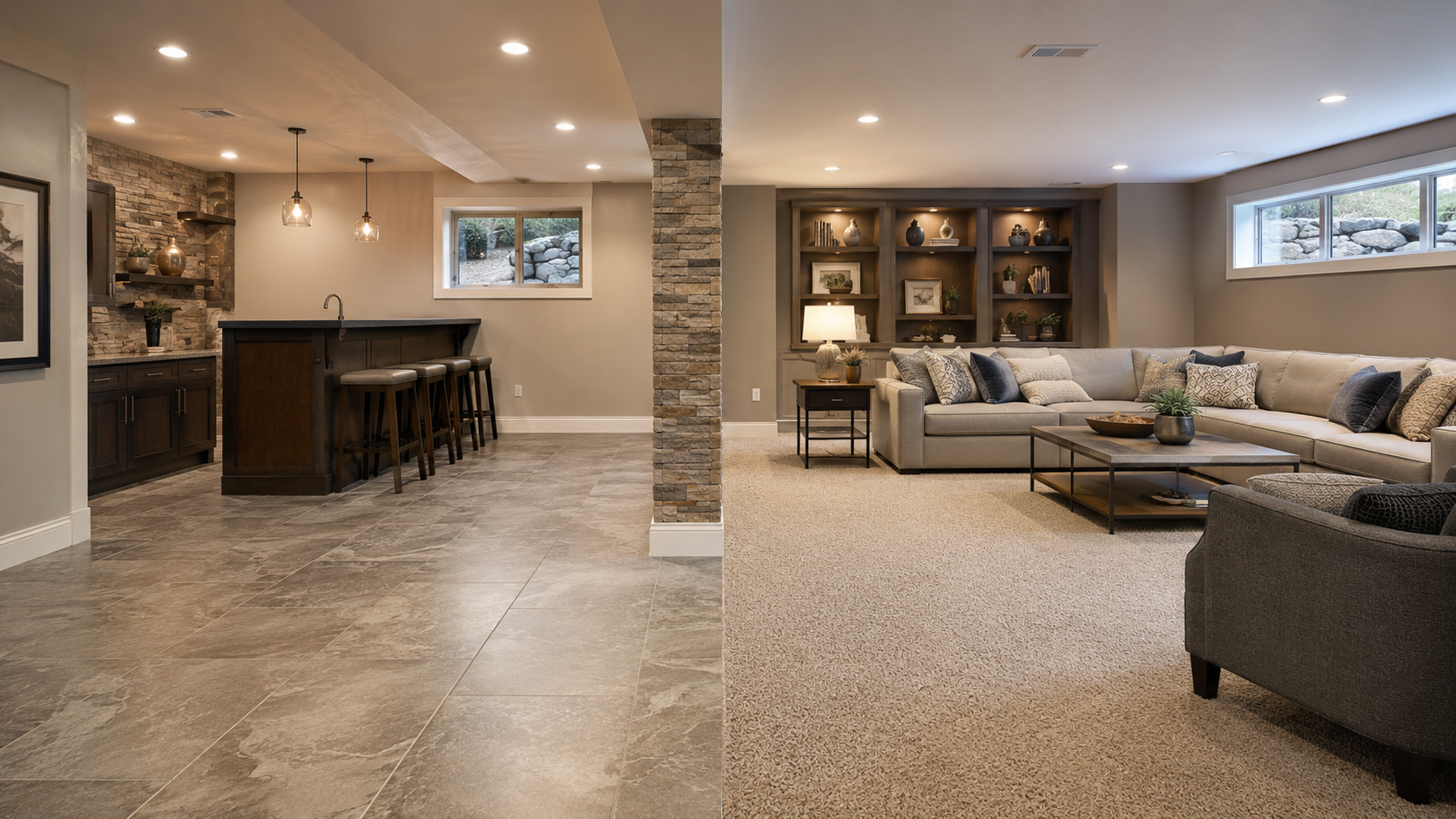
Choosing the Right Basement Flooring Starts With How You Use the Space
Basements can be some of the most versatile areas in a Stratmoor Hills home. One family may turn the lower level into a comfortable media room, while another may need a playroom, guest space, home office, workout area, or combination of several uses. Flooring plays a major role in whether that space feels welcoming and finished or simply functional.
Two popular options are tile and carpet, and each brings very different advantages.
Tile offers durability, easy cleaning, and a wide range of design possibilities. Carpet creates warmth, softness, and a quieter atmosphere that can make a basement feel more like an extension of the main living area.
So, which is better?
There is no universal winner. The better choice depends on the condition of the basement, how the room will be used, the level of comfort you want, and how much maintenance fits your lifestyle.
At Carpet World of Colorado Springs, homeowners can compare flooring options based on the needs of individual rooms rather than relying on a one-flooring-fits-all approach. That can be particularly valuable in basements, where practical considerations and design goals often need to work together.
Before choosing between tile and carpet, it helps to look at moisture, comfort, maintenance, durability, room function, and long-term value. In some Stratmoor Hills homes, one material will clearly make more sense. In others, using both materials in different basement zones can provide the best overall result.
Why Basement Flooring Needs Extra Consideration
Selecting flooring for a basement is different from choosing flooring for a bedroom or upstairs living room.
Basements sit at or below ground level, which can affect temperature, humidity, and the way the floor feels throughout the year. Conditions vary significantly from one home to another, so it is important to evaluate the specific space before selecting a material.
Start With the Condition of the Subfloor
The surface beneath the finished flooring needs to be suitable for the material being installed.
Uneven areas, cracks, previous flooring, or other conditions may require attention before installation begins. Proper preparation contributes to a cleaner finished appearance and helps the flooring perform as intended.
This is one reason professional assessment can be valuable before committing to a specific product.
Pay Attention to Moisture
Moisture deserves special attention in any basement flooring project.
That does not mean every basement has a moisture issue. Instead, homeowners should understand the conditions of their particular space before covering the floor.
Signs such as recurring dampness, visible water intrusion, or unexplained musty odors deserve investigation before new flooring is installed.
Flooring should never be expected to solve an underlying water problem.
Think About Temperature and Comfort
Basements often feel cooler than upstairs rooms. That can make the difference between tile and carpet especially noticeable.
Tile can feel cool underfoot, while carpet creates a softer, warmer surface. Which one feels more appropriate depends largely on what you plan to do in the room.
A basement workshop may have very different priorities from a family movie room.
Why Tile Can Work Well in Stratmoor Hills Basements
Tile is often considered for basements because it provides a hard, durable surface with relatively straightforward everyday care.
It can also create a polished look that works well in both practical and finished living spaces.
Tile Is Easy to Keep Clean
Basements can become high-use areas, especially when they include entrances, recreation spaces, utility areas, or hobby rooms.
Tile provides a surface that can generally be swept, vacuumed, or cleaned without the same concern about trapping dirt within fibers.
That may make it appealing in homes with children, pets, or frequent basement traffic.
It Offers Strong Design Flexibility
Tile does not have to make a basement look cold or purely functional.
Today's tile styles can complement a wide range of interiors, from modern recreation rooms to rustic-inspired lower levels and streamlined home offices.
Homeowners can consider different:
Sizes
Colors
Patterns
Textures
Layouts
Grout combinations
The design can be subtle and neutral or become an intentional visual feature.
Tile Can Suit Multipurpose Areas
Tile can be particularly practical in spaces such as:
Basement entry areas
Laundry areas
Home gyms
Hobby spaces
Game rooms
Utility-adjacent areas
High-traffic walkways
These areas often benefit from flooring that emphasizes durability and easy maintenance.
There Are Trade-Offs
Tile is not automatically perfect for every basement.
A hard surface can feel less comfortable in rooms intended for lounging, and the cooler feel may be noticeable when walking barefoot. It also offers less cushioning for children who spend time playing on the floor.
For homeowners who want a soft, cozy basement, these considerations may outweigh tile's practical advantages.
Why Carpet Can Make a Basement Feel More Comfortable
Carpet appeals to homeowners who want the basement to feel like a true living space rather than a secondary utility area.
Its biggest strengths are comfort, warmth, softness, and sound control.
Carpet Creates a Warmer Feel
One of the most noticeable differences between carpet and tile is how each feels underfoot.
Carpet provides a soft surface that can make a basement feel warmer and more inviting. This can be especially appealing in family rooms, guest areas, playrooms, and media spaces.
If your goal is to create a basement where people want to relax for several hours, comfort may carry more weight than having a hard surface.
It Helps Create a Quieter Space
Carpet can soften footsteps and reduce the sharp, echoing sound that sometimes occurs in rooms with hard flooring and hard walls.
That makes it attractive for:
Home theaters
Children's play areas
Guest rooms
Family rooms
Gaming spaces
Basement offices
A quieter floor can make the entire lower level feel more comfortable.
It Works Well for Barefoot Living
If the basement is primarily used as a second living room, children regularly play on the floor, or guests use the area as sleeping space, carpet can create the softer atmosphere many homeowners prefer.
Padding selection also affects the finished experience, so carpet and padding should be considered together.
Carpet Requires the Right Basement Conditions
Carpet is best considered after homeowners understand the conditions of the room.
If a basement has unresolved moisture concerns, those concerns need to be addressed before flooring selection and installation.
The goal is to choose carpet because it suits a properly prepared living space, not to use flooring to cover an existing problem.
Tile vs. Carpet for Everyday Basement Comfort
When homeowners compare tile and carpet, comfort is often where the two materials differ most clearly.
Tile Favors Practicality
Tile provides a solid, stable surface that works well when ease of cleaning, traffic resistance, and a polished hard-floor appearance are priorities.
It can be particularly useful when the basement includes activities that involve equipment, frequent movement, or the potential for messes.
Carpet Favors Softness
Carpet is generally more inviting for sitting, playing, relaxing, or walking barefoot.
For a basement that functions primarily as a family room or entertainment space, this comfort can be one of the strongest reasons to choose it.
Think About Who Uses the Basement
A household with young children may value a softer floor for playtime.
A homeowner using the basement primarily as a home gym might prefer the practical characteristics of tile or another hard-surface option.
A guest suite may benefit from carpet in the sleeping area while using a hard surface closer to an entry or utility zone.
Instead of asking which flooring is more comfortable in general, ask which one supports the way your household actually uses the room.
Which Flooring Is Easier to Maintain?
Maintenance is another important part of the tile-versus-carpet decision.
Neither material is maintenance-free, but they require different types of care.
Maintaining Tile
Routine tile care generally includes removing dust and debris, cleaning the surface as needed, and paying attention to grout.
Grout lines can collect dirt over time, so they may need more focused cleaning than the tile surface itself.
Homeowners who prefer a hard floor that can be cleaned relatively quickly may appreciate this aspect of tile.
When considering Tile flooring, it is worth comparing not only appearance but also texture, grout choices, room use, and the level of maintenance that fits your household.
Maintaining Carpet
Carpet usually needs regular vacuuming along with timely attention to spills and spots.
Households with pets or children may want to consider products designed with practical performance features such as stain resistance or easier cleaning.
Periodic professional cleaning may also form part of a long-term carpet care routine, depending on the product, traffic, and household.
Which Is Better for Busy Households?
Tile may appeal to homeowners who prioritize straightforward cleanup after everyday messes.
Carpet may still be the preferred choice when comfort is more important and the household is comfortable with regular vacuuming and carpet care.
The better option is the one whose maintenance requirements fit realistically into your routine.
Which Option Holds Up Better in High-Traffic Basement Areas?
Basements are not always low-traffic spaces. Finished lower levels can become some of the busiest parts of a home.
Durability therefore deserves more attention than simply choosing whichever material looks best in a sample.
Tile in High-Traffic Areas
Tile can be an excellent choice for spaces where people frequently walk through, move furniture, exercise, or enter carrying outdoor debris.
The specific tile and installation method still matter, but a properly selected product can provide a durable surface for active areas.
Carpet in High-Traffic Areas
Carpet can also perform well when its construction is matched appropriately to the level of traffic.
For busy basement hallways, stairs, or family spaces, homeowners may want to place greater emphasis on resilience and appearance retention rather than selecting solely for softness.
Match the Product to the Room
A luxury bedroom carpet and a high-traffic basement carpet may both be excellent products, but they are designed around different priorities.
That is why comparing flooring by use case is more helpful than assuming one material or product grade performs best everywhere.
Tile or Carpet for Different Basement Uses?
Breaking the basement into specific activities can make the decision much easier.
Family Room
Carpet often has the comfort advantage.
It creates a softer space for watching television, relaxing, playing games, and spending time together.
Tile can still work well if the homeowner prefers a hard-surface look and plans to use rugs for added softness.
Home Theater
Carpet is often appealing because it can help create a quieter, more comfortable atmosphere.
It also fits naturally with reclining furniture and spaces where people may spend several hours seated.
Children's Playroom
Carpet provides cushioning and warmth that can make floor-based play more comfortable.
Homeowners will also want to consider stain performance and how easily the selected carpet can be maintained.
Home Gym
Tile or another suitable hard surface may be attractive because it creates a firm floor and makes cleanup straightforward.
However, the type of exercise equipment and activities planned for the room should be considered before selecting any finished flooring.
Guest Bedroom
Carpet can make a basement guest room feel warmer and more finished.
If the bedroom is part of a larger multipurpose lower level, combining carpet in the sleeping space with tile elsewhere may create a practical division between zones.
Laundry or Utility-Adjacent Space
Tile may be more attractive in areas where easy surface cleanup carries more weight than softness.
The specific conditions of the room should still be evaluated before installation.
Do You Have to Choose Only One?
One of the most useful approaches for larger Stratmoor Hills basements is to stop thinking of the choice as strictly tile versus carpet.
You may not need to choose one material for the entire lower level.
Use Flooring to Define Different Zones
A basement can contain several distinct spaces, such as:
A television area
A game area
A laundry space
A home office
A workout zone
A guest room
A hallway
Using different flooring materials can help visually define those areas while matching each surface to its purpose.
For example, homeowners may prefer carpet in a media area where softness and quiet matter while choosing tile for a nearby walkway or activity area.
Plan Transitions Carefully
When combining materials, flooring transitions should be considered as part of the overall design rather than as an afterthought.
Differences in flooring height, room layout, traffic flow, and visual continuity can all influence how polished the final space feels.
Professional planning can help different materials look intentional rather than disconnected.
How to Decide What Is Best for Your Stratmoor Hills Basement
The easiest way to make a final decision is to rank your priorities.
Choose Tile If You Prioritize:
Easy everyday surface cleaning
A firm, hard flooring surface
High-traffic practicality
Design flexibility
Flooring for activity-oriented spaces
A polished hard-surface appearance
Choose Carpet If You Prioritize:
Softness underfoot
A warmer feel
Noise reduction
Family-room comfort
A welcoming guest space
Floor-level play for children
A cozy entertainment area
Consider Both If Your Basement Has Multiple Functions
A large finished basement does not always benefit from a single flooring material.
If one side serves as a comfortable family room and another is used for laundry, exercise, hobbies, or regular foot traffic, combining tile and carpet may provide a better balance of comfort and practicality.
The key is making the decision before installation begins so materials, transitions, and the overall layout can be planned together.
Build a Basement Around the Way You Actually Live
Tile and carpet can both work beautifully in Stratmoor Hills basements, but they solve different problems.
Tile stands out for easy maintenance, durability, and versatility in practical or high-use spaces. Carpet stands out for softness, warmth, quieter acoustics, and the ability to make a basement feel like a comfortable living area.
Neither is automatically the better investment.
A family creating a media room may value carpet far more than tile. Someone building a hobby room or multipurpose activity space may reach the opposite conclusion. A larger basement with several distinct uses may benefit most from a combination of the two.
Before selecting either material, consider the condition of the basement, evaluate any moisture concerns, think realistically about traffic and maintenance, and decide how you want the room to feel when it is finished.
The goal is not simply to cover the basement floor. It is to choose a surface that helps transform the lower level into a practical, comfortable part of the home.
If you are comparing tile and carpet for a Stratmoor Hills basement, get in touch with Carpet World of Colorado Springs for personalized guidance on choosing flooring that fits your space, lifestyle, and design goals.


