

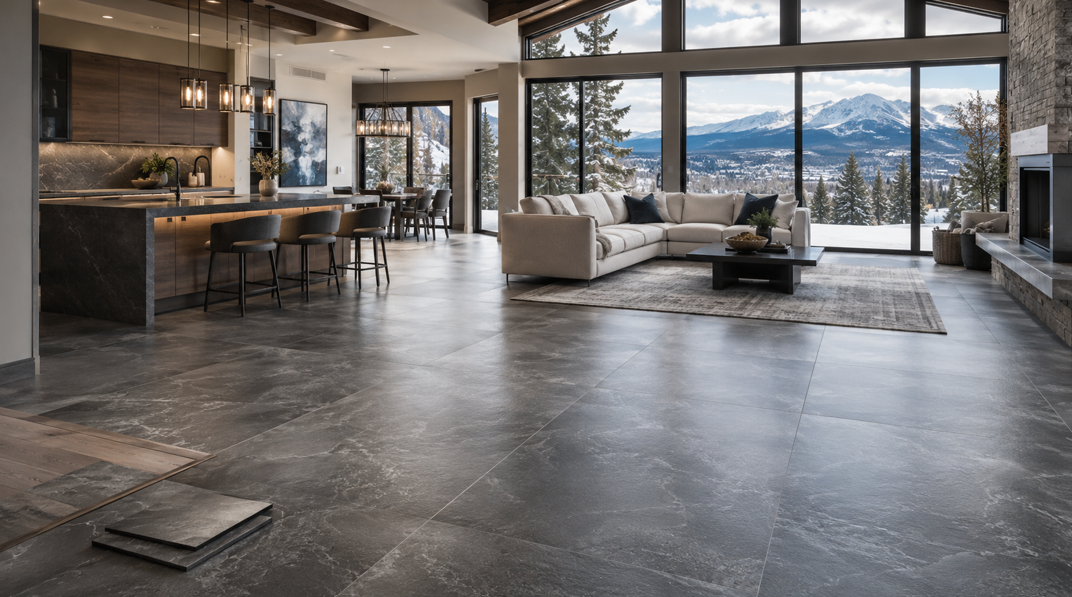
Large format tile has become a standout choice for homeowners who want floors and walls to feel clean, spacious, and thoughtfully designed. Walk into a recently remodeled kitchen or bathroom and there’s a good chance you’ll notice fewer grout lines, broad stone-inspired surfaces, and a more continuous look than traditional smaller tile can provide.
For Colorado Springs homeowners, that visual appeal can work especially well in open kitchens, bathrooms, entryways, finished basements, and fireplace surrounds. Large tiles can create an impressive sense of scale without making the room feel overly busy.
Still, bigger isn’t automatically better.
The condition of the installation surface, room dimensions, tile material, layout, finish, and intended use can all affect whether large format tile is a good fit. An oversized porcelain tile that looks beautiful across an open kitchen may require a different approach in a compact bathroom with several corners and fixtures.
At Carpet World of Colorado Springs, homeowners can compare flooring styles with guidance from a knowledgeable, non-commission sales team focused on finding the right product for each space. With a boutique showroom, personalized service, and more than 40 years of combined flooring and design experience, the team helps make product selection feel clear and approachable.
So, what makes large format tile worth considering, and where can it present challenges? Here’s what Colorado Springs homeowners need to know before making a decision.
What Is Considered Large Format Tile?
Large format tile generally describes tiles that are noticeably larger than traditional square formats. A common industry reference point is tile with at least one side measuring 15 inches or longer, although manufacturers may use the term somewhat differently across product collections.
Popular residential sizes include:
12-by-24-inch rectangular tile
24-by-24-inch square tile
24-by-48-inch tile
Long plank-style tile
Oversized slab-inspired formats
Tile size alone doesn’t determine how dramatic the finished surface will look. Color, pattern, grout selection, orientation, room dimensions, and installation layout all affect the final design.
Porcelain Large Format Tile
Porcelain is a popular option for larger tiles because it combines durability with a broad selection of finishes and styles. Homeowners can find porcelain that resembles marble, limestone, concrete, wood, and other materials.
Depending on the product and its approved application, porcelain can work well in kitchens, bathrooms, entryways, living spaces, and other frequently used areas.
Ceramic Large Format Tile
Ceramic tile also comes in larger dimensions and offers plenty of flexibility in color, pattern, and surface style.
Not every ceramic product is intended for the same application, though. A tile designed for a wall may have different performance characteristics from one intended for flooring. Checking the product specifications helps ensure the selection fits the space.
Natural Stone Options
Natural materials such as marble, travertine, and other stone varieties may also be available in larger formats.
Natural stone can create an impressive, distinctive surface because every piece has its own variation. It may also require different sealing and maintenance considerations than porcelain or ceramic tile, so homeowners benefit from understanding the material before committing to it.
Why Tile Size Changes More Than the Look
A larger tile covers more floor or wall area with each piece. That creates fewer seams, but it also means the installation surface needs careful evaluation.
Think of a long tile placed over a floor with a slight high or low area. Because the tile spans a greater distance, small inconsistencies in the surface can become more noticeable.
That makes preparation and layout especially important when oversized tile is involved.
The Pros of Large Format Tile
Large format tile has more to offer than contemporary style. For the right room, it can create a cleaner visual flow while reducing the number of grout joints across the surface.
Fewer Grout Lines Create a Cleaner Look
One of the biggest visual advantages is simple: larger pieces mean fewer grout lines.
A floor covered with 24-by-48-inch tiles will typically have far fewer joints than the same area covered with smaller tiles. That can make the finished space feel calmer and more continuous.
Fewer grout lines can be especially attractive when homeowners want the tile itself to be the focus. Marble-look porcelain, for example, can display larger stretches of veining without the pattern being interrupted every few inches.
There’s also a practical benefit. Less grout means there are fewer grout joints requiring routine attention, although the tile and grout still need appropriate cleaning and maintenance.
Large Tile Can Make a Room Feel More Open
Large tile doesn’t physically make a kitchen or bathroom larger, but it can influence how spacious the room feels.
With fewer lines breaking up the floor, the eye can move across the surface more freely. This can create an uncluttered appearance in compact bathrooms, kitchens, hallways, and entryways.
In larger rooms, oversized tile can complement the scale of the space instead of creating a dense grid of grout lines.
It Works Beautifully with Modern Interiors
Large format tile is a natural fit for contemporary homes, but it’s more versatile than many homeowners assume.
It can complement:
Minimalist interiors
Transitional kitchens
Spa-inspired bathrooms
Rustic-modern spaces
Open-plan living areas
Stone-inspired Colorado interiors
Clean fireplace designs
The look depends heavily on the material. A soft beige stone effect can feel warm and inviting, while charcoal concrete-look porcelain creates a stronger modern statement.
Stone and Concrete Visuals Feel More Continuous
Many porcelain collections reproduce natural materials through printed patterns, textures, and color variation.
A bigger tile face allows more of that pattern to appear before a grout line interrupts it. The result can make marble veining, subtle concrete movement, or natural stone effects feel more expansive and convincing.
This is particularly useful when homeowners want the elegance of a stone-inspired surface with the characteristics of a manufactured tile product.
Large Format Tile Works on More Than Floors
Oversized tile can also become a design feature on walls.
Common applications include:
Shower walls
Bathroom feature walls
Fireplace surrounds
Kitchen floors
Entryways
Mudrooms
Finished basements
Open living areas
The specific tile still needs to be suitable for its intended location. A beautiful surface isn’t enough on its own. Slip characteristics, moisture exposure, strength, finish, and manufacturer recommendations all matter.
The Cons of Large Format Tile
Large tile can produce a polished, high-end result, but it asks more from the installation process than many smaller formats.
Understanding those requirements helps homeowners compare options based on the entire project rather than appearance alone.
The Installation Surface Needs Careful Preparation
Large tiles tend to highlight irregularities in floors and walls.
If the surface beneath the tile rises or dips, neighboring pieces may not sit at the same height. This can create lippage, which is the noticeable height difference between the edges of adjacent tiles.
Proper surface evaluation can identify areas requiring preparation before installation begins.
Depending on the existing floor or wall, preparation may include correcting high or low areas, repairing portions of the substrate, or using products suited to creating a more suitable installation surface.
The exact approach varies by project, which is why evaluating the room before installation is valuable.
Large Tiles Require Skilled Handling
An oversized tile is heavier and covers more surface area than a small one.
That means careful positioning, bonding, alignment, and support all matter. Larger pieces may also call for specialized tools when cutting around walls, corners, cabinets, plumbing, or other architectural features.
Professional installation helps support:
Consistent alignment
Balanced grout joints
Thoughtful tile placement
Clean cuts
Proper bonding
Smooth transitions between flooring materials
The goal isn’t simply to get the tiles onto the floor. It’s to create a finished layout that looks intentional from one side of the room to the other.
Awkward Room Shapes Can Create More Cuts
Large tile often looks spectacular across a rectangular kitchen or open living area.
Rooms with multiple corners, doorways, cabinetry, built-ins, narrow passages, or unusual angles may require more planning.
Imagine a small bathroom with a vanity, bathtub, doorway, toilet, and several wall changes. A very large tile might leave narrow cuts around certain edges depending on the layout.
That doesn’t mean oversized tile can’t work. It means the tile dimensions need to make sense for the shape of the room.
Shower Floors Need Additional Consideration
Large format tile can look excellent on shower walls, where broad surfaces create fewer visible joints and a smooth, spa-inspired effect.
The shower floor is different.
Shower floors commonly need to slope toward the drain. Smaller tiles can often adapt more naturally to changes in slope while creating additional grout joints underfoot.
For that reason, a homeowner might pair large wall tiles with a coordinating mosaic or smaller tile on the shower floor.
The combination can preserve the large-format look while addressing the functional needs of the space.
Replacing a Tile Later May Take More Planning
Keeping a few spare tiles after installation can be useful with any tiled surface.
Colors, patterns, finishes, and production runs may change over time. If a tile is damaged years later, having matching material available can simplify the process of maintaining a consistent appearance.
With oversized formats, storage space and careful handling are worth considering because the individual pieces are larger and heavier.
None of these drawbacks automatically rule out large format tile. They simply reinforce why product selection, room planning, and installation experience are part of the decision.
Where Large Format Tile Works Well in Colorado Springs Homes
Colorado Springs homes face a mix of seasonal conditions. Snow, dirt, moisture, and grit can enter through exterior doors during colder months, while dry conditions are common throughout much of the year.
Flooring choices still need to be based primarily on the individual room and household, but certain applications make large tile especially appealing.
Entryways and Mudrooms
An entryway needs to balance appearance with everyday practicality.
A suitable porcelain tile can create a durable, polished surface near exterior doors while offering straightforward cleaning when outdoor debris is tracked inside.
Homeowners comparing products may want to consider:
Surface texture
Moisture resistance
Slip characteristics
Grout color
Tile finish
Compatibility with nearby flooring
Not every tile has the same performance characteristics, so the specific product matters more than appearance alone.
Kitchens and Open Living Spaces
Large tiles can be particularly striking when a kitchen connects to a dining room or another living area.
Fewer grout lines support visual continuity, helping the floor feel more unified across the space.
Color also plays an important role. Light neutral shades can support an airy interior, while warm stone looks can complement wood cabinetry and Colorado-inspired design elements. Concrete effects may suit modern kitchens, and matte finishes can create a softer appearance than highly reflective polished surfaces.
Homeowners can explore available Tile flooring styles to compare porcelain, ceramic, stone-inspired designs, colors, textures, and sizes for their project.
Bathrooms
Large tile can transform a bathroom by making the walls or floor appear cleaner and more continuous.
Popular approaches include:
Large tile from floor to ceiling in the shower
Coordinated floor and wall colors
Stone-look porcelain with broad veining
Neutral matte surfaces
Contrasting mosaics inside niches
Smaller coordinating tile on shower floors
Large tile can also reduce the visual busyness that comes from numerous grout joints, which works particularly well in bathrooms where the goal is a calm, spa-like atmosphere.
Finished Basements
A finished basement may serve as a media room, guest space, recreation area, home office, or walkout living area.
Tile can be a practical surface in appropriate basement conditions, and larger formats can give the lower level a more polished residential appearance.
However, flooring shouldn’t be used to hide an existing moisture issue. Any moisture concerns deserve evaluation before a new floor is installed.
Fireplace Surrounds
A fireplace is often one of the strongest focal points in a Colorado living room.
Large stone-look or concrete-look tile can create an impressive surround because fewer seams interrupt the design. Taller fireplace walls can be particularly well suited to broad tiles with natural-looking veining or subtle texture.
The result can feel bold without relying on busy patterns or numerous decorative details.
Is Large Format Tile Right for Your Room?
The best tile size depends on much more than square footage.
Before choosing large format tile, consider how the room is shaped, how people use it, and how the tile will connect with everything around it.
Look at the Room’s Shape
A simple rectangular room may accommodate oversized tile differently from a room with several angles and architectural interruptions.
Useful questions include:
Where will the most noticeable grout lines fall?
Will the layout create narrow cuts along one wall?
How will tiles meet cabinets or built-ins?
What happens at doorways?
Where will tile transition into carpet, hardwood, or another floor?
Which direction creates the strongest visual flow?
Planning those details before installation can make the finished design look much more balanced.
Decide How You Want the Space to Feel
If the goal is a smooth, quiet, contemporary surface, large tiles can be an excellent fit.
If the room calls for intricate patterns, a traditional layout, or highly detailed decorative work, smaller formats may offer more flexibility.
There’s no universally correct size. The right tile supports the design rather than controlling it.
Compare Finishes in Person
Finish affects both appearance and function.
A polished tile reflects more light and may create a formal look. Matte tile tends to feel softer and more understated. Textured surfaces add tactile character and may offer different performance characteristics depending on the product.
Natural stone may also have honed, polished, brushed, or textured finishes.
Seeing and touching samples in person helps homeowners understand how each finish actually feels.
Think About Maintenance
Fewer grout joints can simplify one part of routine care, but every flooring material still has maintenance needs.
Porcelain often has straightforward upkeep, while natural stone may require products and sealing practices appropriate to the material.
Grout color also makes a difference. A grout shade close to the tile color can create a more continuous look, while contrasting grout emphasizes the tile pattern.
View Samples in Your Home
Showroom lighting can’t perfectly reproduce the conditions inside your kitchen or bathroom.
Take samples home when possible and view them alongside:
Cabinets
Wall paint
Countertops
Furniture
Existing flooring
Natural daylight
Evening lighting
A tile that feels cool under bright showroom lighting may look noticeably warmer next to wood cabinets and soft household lighting.
Checking it at different times of day can make the final choice feel more confident.
Why Professional Installation Matters
Large format tile rewards careful preparation.
The final appearance depends not only on the tile itself but also on what happens before and during installation.
The Existing Surface Needs Evaluation
An experienced installer can evaluate the floor or wall and identify areas that may require attention.
The appropriate preparation depends on the existing structure, substrate, chosen tile, and project conditions. Taking care of that groundwork helps create a better foundation for the finished surface.
Layout Planning Shapes the Final Look
Where should the first tile begin?
That question can influence the appearance of the entire room.
A thoughtful layout considers:
Doorways
Cabinets
Vanities
Bathtubs
Fireplace openings
Hallways
Transitions
Major sightlines
For tiles with directional veining or repeated patterns, orientation becomes even more important.
Planning ahead can help balance cuts across the room rather than leaving a visually awkward strip along a prominent wall.
Proper Support Matters
Tile needs appropriate bonding and support beneath the surface.
Because a large tile covers more area, careful placement helps ensure that it sits evenly and securely. The products and installation methods used depend on the tile and project conditions.
This is one area where experienced installation can make a noticeable difference.
Communication Makes the Process Easier
Choosing flooring involves more than selecting a sample.
Homeowners need to know what’s being ordered, how the project will progress, when installation is scheduled, and what to expect along the way.
Carpet World of Colorado Springs places clear communication at the center of the customer experience, from product selection and ordering through delivery and professional installation.
Its “No Surprise” approach is built around honest expectations and straightforward service, helping homeowners move into a flooring project with a clearer understanding of what comes next.
Choosing Large Format Tile with Confidence
Large format tile can be a beautiful choice for Colorado Springs homeowners who want fewer grout joints, strong visual continuity, and expansive stone, concrete, or contemporary looks.
It may be especially appealing when you want:
A clean, streamlined surface
A spacious visual effect
Large stone-inspired patterns
Fewer visible grout lines
A modern or transitional style
A durable tile surface suited to the room
At the same time, large tile deserves additional planning when a room has uneven surfaces, several tight corners, unusual transitions, sloped areas, or a layout that could create awkward cuts.
The strongest projects start by considering the whole room instead of focusing only on tile size.
Material, finish, color, grout, existing surfaces, lighting, room proportions, and installation all work together to create the finished result.
That’s where knowledgeable guidance can help. Carpet World of Colorado Springs combines more than 40 years of flooring and design experience with a boutique showroom and a non-commission sales approach. Instead of pushing a particular style, the team can help customers compare options based on the home, lifestyle, project goals, and desired look.
If you’re visiting the showroom, consider bringing room measurements, photos, paint colors, cabinet samples, or inspiration images. Those details can make conversations about tile size, color, layout, and coordinating materials much more productive.
Ready to find out whether large format tile fits your space? Get in touch with Carpet World of Colorado Springs for personalized flooring guidance and professional installation support.


