

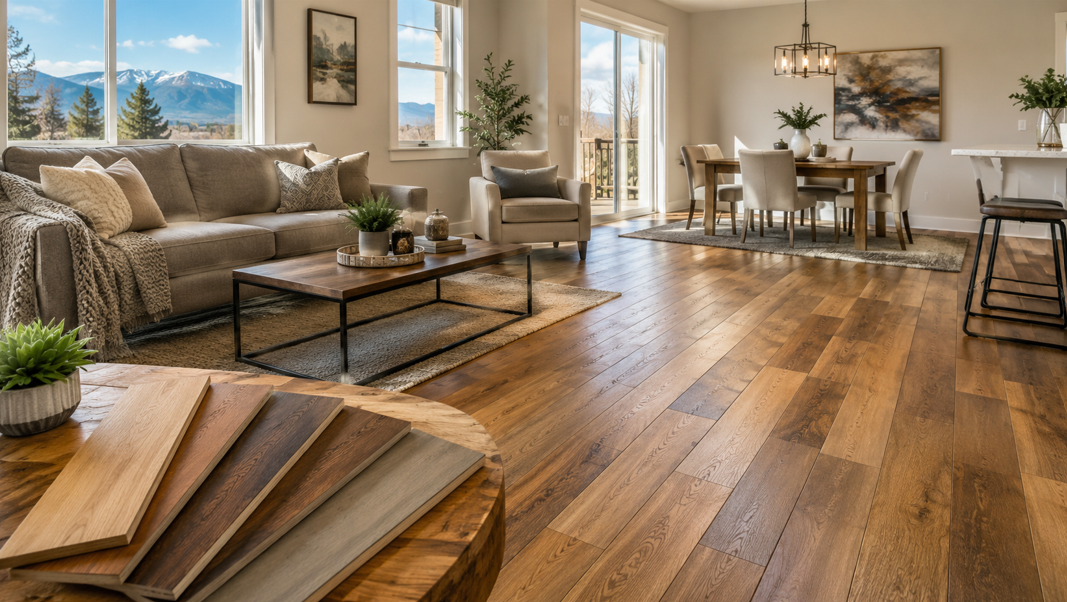
Rental flooring has a different job from flooring in a home you occupy yourself. It still needs to look beautiful and feel inviting, but landlords also have to think about tenant turnover, maintenance, pets, furniture movement, cleaning, long-term wear, and how easily a damaged area can be addressed between leases.
For rental properties in Fountain, Colorado, hardwood can be an attractive investment when the right product is selected for the space. The area's dry climate, snowy winter weather, active households, and regular movement between indoor and outdoor spaces all influence how a wood floor performs.
At Carpet World of Colorado Springs, property owners can compare hardwood styles with help from a knowledgeable, non-commission sales team. Rather than choosing flooring based only on appearance, rental owners can consider durability, construction, finish, color, maintenance, and long-term value together.
For many Fountain rentals, engineered oak, hickory, maple, and durable factory-finished hardwood products are strong options. The best choice ultimately depends on the type of property, expected tenant lifestyle, room location, budget, and how long the owner plans to keep the flooring.
What Makes Hardwood a Good Fit for a Rental Property?
Hardwood is often associated with owner-occupied homes, but it can also make sense in rental properties when landlords take a long-term approach.
The main advantage is that genuine wood creates an appearance tenants recognize as a premium feature. A clean hardwood floor can make a living room, dining space, or bedroom feel warmer and more polished without relying on temporary design trends.
Hardwood Can Strengthen a Property's Overall Presentation
Rental properties compete on more than square footage and location. Interior condition plays a significant role in how prospective tenants experience a property during a showing.
Hardwood can create a cohesive appearance across living spaces and hallways. Neutral wood tones also work with many furniture styles, allowing tenants to personalize the space without the flooring becoming visually restrictive.
That versatility can be especially useful when a rental changes occupants regularly.
Long-Term Value Matters More Than the Lowest Initial Price
Rental owners often compare flooring based on purchase and installation cost. That is understandable, but replacement frequency also deserves attention.
A higher-quality hardwood product that fits the property's use may provide more value than selecting an unsuitable floor that requires premature replacement.
Some wood floors can also be renewed through professional refinishing when their construction and remaining wear layer allow it. The National Wood Flooring Association even operates a voluntary Engineered Wood Flooring Refinishable Program to identify qualifying engineered products with sufficiently thick wear layers.
For a long-term rental investment, the ability to refresh a floor instead of immediately replacing it can be worth considering.
Hardwood Still Requires Realistic Expectations
Hardwood is not maintenance-free.
Dragging furniture can scratch it. Grit can wear the finish. Pet claws may leave marks. Standing water can cause problems depending on the product. Some rental properties simply experience more aggressive wear than others.
That does not make hardwood a poor rental choice. It means the product needs to match the property rather than being selected only because it looks appealing in a showroom.
Engineered Hardwood Is Often a Strong Starting Point
For many Fountain rental properties, engineered hardwood deserves to be near the top of the comparison list.
Engineered hardwood uses a genuine hardwood surface over a layered core. That construction generally provides greater dimensional stability than traditional solid wood when environmental conditions change.
That can be useful for property owners who want authentic wood while also prioritizing practical performance.
Why Engineered Construction Appeals to Landlords
Rental properties do not always receive the same careful environmental management as an owner's primary residence.
One tenant may run a humidifier regularly. Another may keep the home much drier. Heating habits, cleaning routines, and seasonal conditions can all vary from lease to lease.
Engineered hardwood's layered construction makes it an attractive option when stability is a priority.
It can also offer more flexibility regarding installation location, depending on the specific manufacturer's requirements. Product specifications still need to be checked because not every engineered floor is approved for every room or installation condition.
Pay Attention to the Wear Layer
Not all engineered hardwood is constructed the same way.
The thickness of the genuine wood surface affects what may be possible later. Some engineered products can be professionally sanded and refinished, while thinner products may have limited or no traditional refinishing capability.
For a rental owner planning to hold a property for many years, this distinction matters.
Ask whether the specific flooring is designed to be refinished and what the manufacturer allows. Do not assume that every engineered hardwood can be renewed in the same way as a thick solid hardwood plank.
Look for a Durable Factory Finish
Rental properties benefit from a surface finish designed for everyday traffic.
Factory-finished hardwood is manufactured under controlled conditions and can provide consistent protection across the planks. When comparing products, ask about wear warranties, scratch resistance, cleaning requirements, and recommended maintenance.
The goal is not to find flooring that can never show wear. No real wood surface can promise that. The goal is to choose a finish that makes sense for the amount and type of traffic the property is likely to receive.
Oak Is a Versatile Choice for Fountain Rentals
If a landlord wants a hardwood species that balances appearance, availability, versatility, and familiar styling, oak is a logical place to begin.
Both red oak and white oak have long been used in American homes, and their recognizable grain patterns make them easy to pair with many interior styles.
White Oak Works Well With Modern and Traditional Interiors
White oak has become popular across a wide range of design styles because it can move easily between traditional, transitional, rustic, and contemporary interiors.
Depending on the stain and finish, it can appear light and natural, warm and classic, or deeper and more dramatic.
For a rental owner, this versatility is useful because the floor does not depend on one tenant's decorating preferences.
Medium and natural tones can be particularly practical because they create warmth while avoiding an overly specific design direction.
Grain Variation Can Help Everyday Wear Blend In
A perfectly uniform floor can make individual marks more noticeable.
Oak's visible grain and natural variation give the floor character while helping minor everyday wear feel less visually dominant. That does not mean scratches disappear, but a textured, varied surface can often be more forgiving than an extremely smooth, uniform appearance.
Low-sheen and matte finishes may also make everyday wear less conspicuous than very glossy surfaces.
Oak Provides Plenty of Design Flexibility
Rental owners can choose from different plank widths, surface textures, stains, and finishes without leaving the oak category.
That makes it easier to match flooring to the property's price point.
A compact rental may suit a clean, straightforward oak plank, while an upgraded property could justify wider boards or a more distinctive texture.
Owners comparing species and constructions can browse available Hardwood flooring and evaluate samples based on both visual appeal and practical requirements.
Hickory Can Be a Smart Choice for Active Rentals
Some rental properties need flooring with more visual movement and a casual, durable character.
Hickory is worth considering for those homes.
Hickory Has a Naturally Distinctive Appearance
Hickory typically shows stronger variation between light and dark areas than many more uniform wood species.
That creates a lively, natural-looking floor.
For a rental in Fountain with a rustic, mountain-inspired, farmhouse, or casual interior, this character can be a strong design feature.
The variation also means the floor is not trying to look perfectly uniform from plank to plank.
It Can Suit Busy Households
Hickory is known as a relatively hard domestic hardwood species, which can make it appealing for active residential spaces.
Hardness alone does not make a floor scratch-proof, though. Finish quality, plank construction, maintenance, grit, furniture movement, pets, and footwear all affect how a finished floor ages.
For landlords, it is better to consider the complete product rather than selecting a species based on hardness alone.
Consider Whether the Visual Variation Fits the Property
Hickory's character is one of its biggest strengths, but it is also more distinctive than a restrained oak or maple floor.
If the rental is designed around clean, minimal interiors, strong color variation may not be the best fit.
If the goal is warmth and personality, hickory can give a relatively simple rental interior much more visual interest without requiring elaborate decorating.
Maple Can Create a Clean, Contemporary Rental
Maple offers a different look from oak and hickory.
Its grain is typically more subtle, giving rooms a smoother and more streamlined visual effect.
Maple Works Well in Bright Interiors
Light and natural maple tones can help create a bright, open feeling.
That can work particularly well in smaller rentals where the owner wants the interior to feel fresh and spacious.
Maple pairs naturally with white walls, neutral cabinetry, simple trim, and modern furnishings.
Subtle Grain Creates a Refined Look
Some tenants prefer strong wood grain, while others like a quieter background.
Maple can work well when the flooring is intended to support the room rather than become its dominant design feature.
This makes it a useful option for contemporary rentals, townhomes, smaller houses, and properties where a clean presentation is important.
Finish Selection Still Matters
Because maple can have a smoother visual appearance, marks may stand out differently than they would on a heavily grained floor.
A durable factory finish and practical sheen level become especially important.
Rental owners may want to compare matte, low-sheen, textured, or lightly wire-brushed options rather than automatically choosing a glossy, perfectly smooth surface.
The right finish can make a substantial difference in how comfortably the floor ages between tenant turnovers.
Choose Colors and Textures That Make Rental Maintenance Easier
Species is only part of the decision.
Color, texture, sheen, and plank styling can influence how frequently a rental floor appears to need cosmetic attention.
Medium Wood Tones Are Often Forgiving
Very dark flooring can create dramatic contrast, but it may also make dust, light-colored debris, and some surface marks more noticeable.
Extremely pale floors create a beautiful airy look but can show certain stains or dark debris more clearly.
A natural or medium wood tone often offers a practical balance.
It can coordinate with many paint colors and furniture styles while creating enough visual variation to handle normal day-to-day use gracefully.
Matte and Low-Sheen Finishes Deserve Consideration
Highly glossy flooring reflects more light, which can draw attention to scratches and surface irregularities.
Matte or low-sheen flooring tends to create a softer visual effect.
For a rental where different tenants may maintain the floor differently, that more relaxed finish can be valuable.
Texture Can Add Character and Practicality
Wire-brushed and lightly textured hardwood surfaces emphasize natural grain and create a less uniform appearance.
That can work particularly well in busy rentals because the overall design already includes visual texture.
The purpose is not to disguise damaged flooring. Instead, it is to choose a style that ages naturally and does not depend on remaining perfectly smooth to look attractive.
Avoid Selecting Only for Current Trends
Rental flooring may remain in place through many design cycles.
A highly unusual stain or extremely distinctive trend can date more quickly than a balanced, natural wood look.
Landlords often benefit from choosing flooring that feels current without relying on a short-lived style.
Natural oak, warm brown, neutral beige-brown, and restrained medium tones can work with changing wall colors, cabinets, furnishings, and tenant tastes over time.
Think About Pets, Turnover, and Daily Tenant Life
A rental floor needs to be chosen for reality rather than the ideal conditions shown in a product photograph.
That means thinking through who is likely to live in the property and what the floor will experience.
Pet-Friendly Rentals Need Extra Planning
If pets are allowed, ask about scratch resistance, finish performance, warranty terms, and cleaning guidance.
Keeping nails trimmed and removing gritty debris from paws can reduce surface wear, but landlords cannot assume every tenant will follow an ideal maintenance routine.
A textured, medium-tone hardwood with a strong factory finish may therefore be more practical than an extremely dark, glossy, smooth floor.
Furniture Movement Is Part of Every Turnover
Every new lease can mean sofas, beds, dining tables, desks, and appliances moving through the home.
Furniture pads can help, but accidental dragging still happens.
Rental owners can reduce risk by choosing products suited to residential traffic and by documenting basic hardwood care in tenant move-in information.
A short flooring-care section explaining appropriate cleaners, spill cleanup, furniture protection, and prohibited cleaning methods can be more useful than expecting tenants to know how to maintain wood automatically.
Entryways Need Special Attention in Fountain
Colorado weather deserves consideration.
Snowy footwear can bring moisture and grit into the home during winter, while outdoor activity can introduce fine debris during drier months.
Well-placed entry mats can catch much of that material before it moves across hardwood.
Regular sweeping or vacuuming with an appropriate hard-floor attachment can also reduce abrasive particles. Flooring manufacturers commonly recommend removing grit regularly because loose particles can scratch a hardwood finish.
Decide Where Hardwood Makes the Most Sense
Hardwood does not need to cover every square foot of a rental property to add value.
Strategic placement can sometimes be the better investment.
Living Rooms and Dining Areas
These are natural spaces for hardwood because appearance matters and the flooring helps establish the character of the property.
Open living and dining areas can also benefit from continuous flooring rather than multiple transitions between surfaces.
Bedrooms
Hardwood can give bedrooms a clean, updated appearance and eliminates the need to replace carpet at every sign of heavy wear or staining.
Area rugs can add softness while leaving most of the hardwood visible.
Hallways
Hallways receive concentrated foot traffic, so product durability and finish selection matter.
Using the same hardwood as adjoining living areas can create a cohesive look and avoid visual breaks.
Kitchens Require Product-Specific Planning
Some hardwood and engineered hardwood products can work well in kitchens, but moisture protection and manufacturer approvals need to be considered carefully.
Spills, sinks, dishwashers, refrigerators, and pet water bowls all increase the chance of moisture exposure.
A landlord considering hardwood in a kitchen can ask specifically about water resistance, warranty coverage, installation requirements, and recommended cleanup procedures.
Basements and Bathrooms Need More Scrutiny
Not every hardwood product belongs below grade or in rooms where moisture exposure is frequent.
Engineered hardwood may offer more installation flexibility than solid wood, but approval still depends on the specific product and conditions.
For these rooms, compare the manufacturer's installation and warranty requirements before committing to hardwood simply for visual consistency.
Choose Hardwood as a Long-Term Rental Investment
The best hardwood flooring for a Fountain rental is not necessarily the hardest species, the lowest-priced plank, or the trendiest color.
It is the product that balances appearance, construction, maintenance, tenant lifestyle, installation location, and the owner's long-term plan.
For many rental properties, engineered hardwood is an excellent place to start because it combines genuine wood with a more stable layered construction. Oak offers broad design flexibility and familiar appeal. Hickory brings distinctive character for active, casual interiors, while maple creates a cleaner and more contemporary look.
Beyond species, landlords can improve their flooring decision by prioritizing durable factory finishes, practical medium tones, lower sheen levels, and products with warranty terms that fit the property.
Carpet World of Colorado Springs can help rental owners compare hardwood options based on real property needs rather than a one-size-fits-all recommendation. With personalized service, experienced flooring professionals, and professional installation support, property owners can build a flooring plan that looks inviting to tenants while supporting long-term ownership goals.
Planning new hardwood for a Fountain rental property? Reach out to us to discuss the property, expected traffic, design goals, and hardwood options with the Carpet World of Colorado Springs team.


