

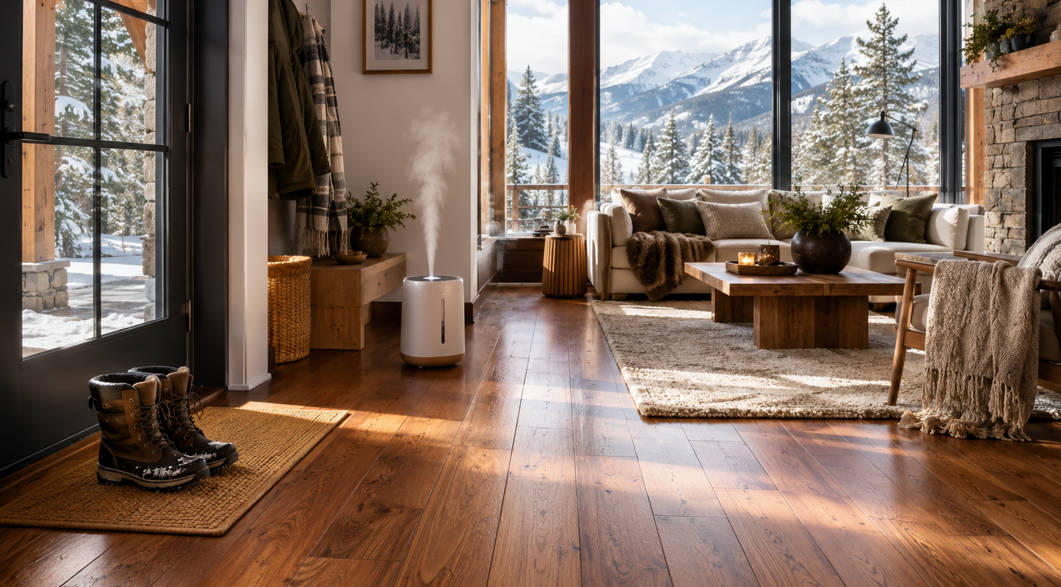
Colorado winters can be beautiful, but they introduce a few challenges for hardwood flooring. Snow gets tracked through entryways, road grit follows boots indoors, heating systems dry out interior air, and temperatures can swing dramatically between a cold morning and a sunny afternoon.
For hardwood floors, those seasonal changes matter.
Wood naturally responds to changes in its surrounding environment. When indoor air becomes especially dry, flooring can lose moisture and contract slightly. When moisture levels rise again, the wood can expand. Add wet boots, salt, sand, and everyday foot traffic, and winter can become one of the most important times of year to pay attention to hardwood care.
Fortunately, protecting hardwood during a Colorado Springs winter doesn’t require turning floor care into a major project. A few consistent habits can help preserve the floor’s appearance, finish, and long-term performance.
At Carpet World of Colorado Springs, homeowners can explore flooring options with guidance from a knowledgeable, non-commission sales team that focuses on matching each customer with products suited to their home, lifestyle, and design goals. With more than 40 years of combined flooring and design experience, the family-owned team also helps customers understand how to care for their investment after installation.
If hardwood is already part of your home, here’s how to help it handle Colorado’s colder months with confidence.
Why Colorado Winters Affect Hardwood Floors
Hardwood is a natural material, and natural wood responds to its environment.
That doesn’t mean winter automatically damages hardwood. It means indoor humidity, tracked-in moisture, abrasive debris, and heating habits deserve attention during colder months.
Dry Indoor Air Can Affect Wood Movement
Heating systems help keep Colorado homes comfortable when temperatures drop, but heated indoor air can become quite dry.
As wood loses moisture, boards may contract slightly. Homeowners sometimes notice small seasonal gaps between planks during the driest part of winter.
Minor seasonal movement can be normal, depending on the flooring product, installation, home conditions, and humidity level. The important point is consistency. Large swings in indoor conditions can place more strain on wood than a reasonably stable environment.
Snow and Slush Bring Moisture Indoors
Snow may look harmless on a pair of boots, but once it melts, that moisture can collect near exterior doors or travel farther into the house.
Hardwood performs best when standing water is cleaned promptly. Moisture left sitting on the surface may affect the finish or find its way between boards.
Entryway routines are therefore one of the easiest ways to protect hardwood during winter.
Sand and Grit Can Scratch the Finish
Colorado winter roads and walkways can leave behind sand, grit, and small particles that cling to shoes.
Once those particles reach hardwood, they can behave almost like fine abrasive material underfoot. Repeated traffic over grit can dull or mark the finish, particularly in busy areas.
Regular removal is usually more effective than waiting until floors visibly look dirty.
Keep Winter Moisture at the Door
One of the best ways to protect hardwood is to prevent snow and water from spreading across the floor in the first place.
Use Entry Mats Strategically
Place suitable mats near the doors your household uses most often.
A good winter setup may include:
An exterior mat that helps remove larger debris
An interior mat that captures moisture and finer particles
A boot tray for snowy footwear
A designated area for wet coats or outdoor gear
The goal is simple: stop as much moisture and grit as possible before it reaches the hardwood.
When choosing mats, make sure the backing is appropriate for the flooring. Certain backing materials can interact with some finishes, so checking flooring and rug manufacturer recommendations is worthwhile.
Create a Shoes-Off Routine
A household shoes-off habit can significantly reduce the amount of moisture and abrasive material reaching hardwood floors.
During winter, boots can carry:
Snow
Water
Fine gravel
Sand
Deicing residue
Dirt
Keeping outdoor footwear near the entrance also makes routine cleaning easier because debris stays concentrated in one area.
Wipe Up Water Promptly
If snow melts onto the floor, clean it up rather than allowing it to dry naturally.
Use a soft, absorbent cloth or towel to remove the moisture.
Pay particular attention to areas around:
Exterior doors
Mudrooms
Hallway entrances
Kitchen doors
Patio access points
If hardwood runs through an open floor plan, a small amount of water near the entrance can travel farther than expected as people move through the home.
Control Indoor Humidity Through the Heating Season
Winter hardwood care isn’t only about what comes in on your boots. Indoor air conditions matter too.
Why Humidity Matters
Wood naturally gains and loses moisture in response to its surrounding environment.
When indoor air becomes very dry, hardwood may contract. When humidity rises, wood can absorb moisture and expand.
Seasonal movement varies according to the flooring type, wood species, plank construction, installation method, and conditions inside the home.
Instead of trying to eliminate all natural movement, homeowners can focus on avoiding extreme or rapid environmental changes.
Monitor Conditions Rather Than Guessing
A simple indoor humidity monitor can help homeowners understand how conditions change during winter.
If the home becomes unusually dry once the heating system runs regularly, a humidification solution may be worth discussing with an HVAC professional.
Avoid assuming that more humidity is always better. Excess moisture can create its own concerns for flooring and the home.
The useful goal is a stable indoor environment that aligns with the hardwood manufacturer’s recommendations.
Consider Different Areas of the Home
Humidity can vary from room to room.
A sunny living room, finished basement, bedroom, and area near a fireplace may not experience exactly the same conditions.
Pay extra attention to rooms with:
Wood-burning or gas fireplaces
Strong afternoon sun
Heating vents directed toward the floor
Large exterior doors
Minimal air circulation
If a specific area consistently shows unusual floor movement, environmental conditions may be worth investigating.
Remove Grit Before It Has Time to Wear the Finish
Winter debris may be small, but repeated foot traffic can make it more noticeable over time.
Sweep or Vacuum Regularly
Frequent light cleaning is usually more useful than allowing grit to accumulate.
Use a soft broom, microfiber dust mop, or vacuum setting suitable for hardwood.
Pay particular attention to high-traffic areas such as:
Entryways
Hallways
Kitchen walkways
Paths between exterior doors and living spaces
Areas around dining tables
When vacuuming, use attachments and settings designed to avoid scratching the flooring.
Don’t Let Visible Dirt Set the Cleaning Schedule
Hardwood may look clean while still holding fine particles.
In winter, grit often settles along plank edges, near baseboards, and beneath entry rugs.
A quick cleaning routine can help remove those particles before repeated footsteps grind them against the finish.
Clean Under Mats Too
Mats protect hardwood, but debris can collect underneath them.
Lift and clean beneath entry rugs periodically, especially during snowy periods. Make sure the flooring is dry before returning the mat to its place.
This also gives you an opportunity to check for moisture that may have passed through or around the mat.
Use Cleaning Products Designed for Your Hardwood
Winter often leads to more frequent floor cleaning, which makes product selection especially important.
Avoid Excess Water
Hardwood generally doesn’t need to be soaked to become clean.
A heavily saturated mop can leave more moisture on the floor than the surface needs.
Instead, follow the care instructions for the specific flooring and finish. Many hardwood floors respond well to cleaning methods that use minimal moisture and a compatible cleaning product.
Choose Compatible Cleaners
Not every household cleaner belongs on hardwood.
Products that leave a heavy residue can affect the appearance of the finish, while strong or unsuitable cleaning agents may not be recommended by the flooring manufacturer.
Before using a new cleaner, check:
Flooring manufacturer guidance
Finish requirements
Product compatibility
Application instructions
If you’re unsure what type of hardwood you have, professional flooring guidance can help narrow down an appropriate maintenance approach.
Skip Improvised Cleaning Mixtures
Homemade solutions are popular online, but they may not suit every wood floor or finish.
A cleaner that works on one type of flooring might leave another looking dull or uneven.
Choosing products based on the floor rather than a generic household recipe helps keep maintenance predictable.
Protect High-Traffic Areas Without Hiding the Floor
Hardwood is meant to be enjoyed, not covered from wall to wall.
Strategic protection can help the most heavily used areas handle winter traffic while allowing the natural character of the flooring to remain visible.
Use Rugs Where Traffic Is Concentrated
Consider area rugs or runners in places where people repeatedly walk.
Useful locations may include:
Main hallways
Entry paths
In front of frequently used doors
Seating areas
Kitchen work zones
Choose rug pads that are suitable for hardwood and the specific floor finish.
Rotate Rugs Occasionally
Sunlight, traffic, and normal aging can gradually affect how a wood floor looks.
Moving or rotating rugs periodically may help the surrounding areas experience wear and light exposure more evenly.
This is especially worth considering in sunny Colorado rooms with large windows.
Protect Furniture Contact Points
Winter often means spending more time indoors, so furniture may receive more use.
Felt or manufacturer-recommended furniture protectors can reduce marks from chair legs, tables, stools, and frequently moved pieces.
Check the pads periodically because dust and grit can become trapped beneath them.
Watch for Scratches, Finish Wear, and Small Changes
Winter is a useful time to inspect hardwood rather than waiting until a visible issue becomes more noticeable.
Look at High-Traffic Zones
Inspect floors near:
Exterior doors
Kitchen entrances
Hallways
Dining chairs
Pet areas
Furniture pathways
You’re looking for changes such as surface dullness, scratches, worn finish, or areas that appear different after cleaning.
Address Small Problems Earlier
Not every mark requires refinishing.
Some surface concerns may be related to residue, minor finish wear, or normal use. Others may benefit from professional evaluation.
The advantage of noticing changes early is that homeowners can understand their options before wear progresses further.
Know When Refinishing May Be Worth Considering
Hardwood refinishing can restore the appearance of certain floors when the existing finish becomes worn.
Whether refinishing is appropriate depends on factors such as:
The type of hardwood
The thickness and construction of the floor
Previous refinishing
Condition of the boards
Depth of scratches or damage
Existing finish
A professional assessment can determine whether refinishing, repair, maintenance, or another approach makes sense.
Choose Hardwood with Colorado Living in Mind
Homeowners planning a remodel can also use winter performance as part of the product-selection conversation.
There’s no single hardwood that is automatically best for every Colorado Springs home. Household activity, room location, desired look, maintenance preferences, and environmental conditions all matter.
Solid and Engineered Hardwood Behave Differently
Solid hardwood is made from a single piece of wood, while engineered hardwood uses multiple layers with a real wood surface.
Their construction influences how they respond to different environments and installation conditions.
Engineered products may be considered for certain applications where dimensional stability is an important factor, while solid hardwood remains a popular choice for its traditional construction and long-term character.
The right choice depends on the specific product and room.
Homeowners comparing species, colors, plank widths, constructions, and finishes can explore Hardwood flooring options and discuss which products align with their home and lifestyle.
Finish Matters Too
Hardwood finishes help protect the wood surface from everyday wear.
Some finishes emphasize a natural matte appearance, while others offer more sheen. Textured or character-rich surfaces may also make minor everyday wear less visually prominent than very smooth finishes.
Think about how the room will actually be used, not only how the sample looks under showroom lighting.
Consider Household Activity
A quiet guest room and a busy entry-adjacent living room face very different levels of daily use.
Before choosing hardwood, consider:
Children
Pets
Foot traffic
Outdoor access
Furniture movement
Cleaning habits
Desired maintenance level
Matching the flooring to everyday life can make the finished space easier to enjoy.
Don’t Forget Pets During Winter
Pets can add another layer to winter floor care.
Dogs in particular may bring snow, moisture, and grit indoors after walks or time in the yard.
Keep a Towel Near the Door
A quick paw wipe can help reduce moisture and debris before pets move through the home.
Pay attention to fur around paws, where snow and small particles may collect.
Keep Nails Maintained
Regular nail care can reduce scratching from everyday movement across hardwood.
This matters throughout the year, but winter can increase indoor activity when pets spend less time outside.
Clean Pet Areas Regularly
If your pet uses the same entrance repeatedly, that area may collect more dirt and moisture than other parts of the floor.
Adding a suitable mat and cleaning the zone regularly can help contain winter debris.
Be Careful with Deicing Residue
Snow isn’t the only substance that may reach floors during winter.
Products used on roads, pavements, driveways, and steps can travel indoors on footwear.
Depending on the material, residue may appear as white marks, streaks, or fine particles.
Remove Dry Debris First
If grit is present, sweep or vacuum it before wiping the floor.
Dragging abrasive debris around with a damp cloth may create unnecessary surface wear.
Use the Recommended Cleaning Method
Once loose material is removed, clean the area according to the hardwood manufacturer’s care instructions.
Avoid repeatedly adding more cleaner if residue remains. Using too much product can sometimes create a film that looks like dirt or dullness.
If a mark persists and you’re unsure what caused it, flooring professionals can help identify a suitable next step.
Prepare Hardwood Before Winter Arrives
The easiest winter floor-care routine often starts before the first major snow.
A little preparation in autumn can reduce the amount of attention floors need once snowy weather arrives.
Check Entry Areas
Before winter, make sure you have:
Clean exterior mats
Suitable indoor mats
A boot tray
Absorbent towels
A convenient vacuum or broom
Hardwood-compatible cleaning products
When supplies are easy to reach, cleaning up snow and grit becomes part of the normal routine rather than something that gets postponed.
Inspect the Floor
Take a look at high-traffic areas before winter starts.
If the finish already appears heavily worn, dealing with it before months of snowy foot traffic may make sense.
Review Humidity
Monitor indoor conditions as heating season begins rather than waiting until the driest part of winter.
That gives you a better understanding of how your home changes as outdoor temperatures fall.
Help Hardwood Look Beautiful All Winter
Colorado winter hardwood care comes down to a few consistent habits.
Keep moisture near the entrance. Remove grit before it gets walked across the floor. Maintain a reasonably stable indoor environment. Use cleaning products suited to the flooring. Watch high-traffic areas, and address noticeable changes before they become larger concerns.
For many households, that routine is enough to keep winter maintenance manageable.
Hardwood remains one of the most distinctive flooring choices available because every plank brings natural grain, color, and character into a room. Protecting that surface isn’t about making the home feel untouchable. It’s about creating simple habits that support the floor while everyday life continues around it.
Carpet World of Colorado Springs combines more than 40 years of flooring and design experience with personalized showroom service, a non-commission sales team, and licensed, experienced installers. Whether you’re caring for existing hardwood, considering refinishing, or planning a new floor, knowledgeable guidance can help you understand the options available for your space.
Not sure how to prepare your hardwood for the coming winter or whether a new flooring option better fits your home? Get in touch with Carpet World of Colorado Springs for personalized guidance on flooring selection, installation, care, and refinishing.


