

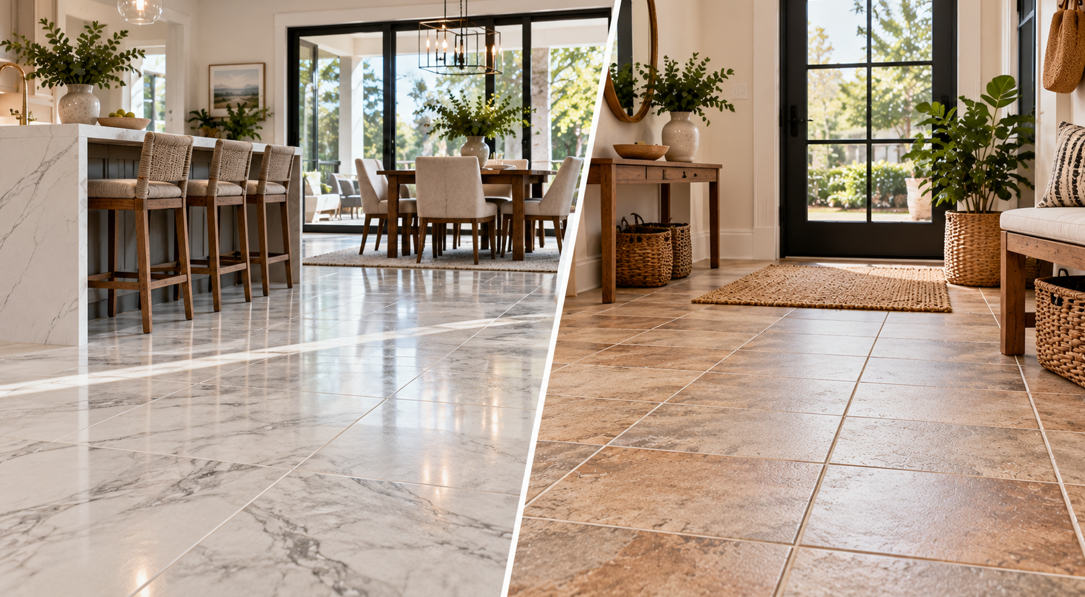
Fountain homeowners planning a kitchen, bathroom or entryway update often reach the same crossroads: porcelain or ceramic tile? Both are durable, attractive and easy to clean, and both look similar on a showroom display. Yet they differ in density, water absorption and how they handle daily wear. At Carpet World, our family-owned team helps homeowners across Fountain and the Pikes Peak Region compare tile options side by side, and this guide explains the key differences so you can choose with confidence.
What Porcelain and Ceramic Have in Common
Porcelain and ceramic tile are both made from clay that is shaped and fired in a kiln. Both can be glazed in endless colors and patterns, and both offer a hard, durable surface that resists stains and is easy to wipe clean. Each is a strong choice for kitchens, bathrooms, laundry rooms and entryways.
The differences come from the clay mixture and firing process.
How Porcelain Is Different
Porcelain tile is made from finer, denser clay and fired at higher temperatures. The result is a harder, less porous tile.
Low water absorption. Porcelain absorbs very little water, making it excellent for bathrooms, showers and entryways that see snow and slush.
High durability. Its density helps it stand up to heavy foot traffic, pets and dropped objects.
Through-body color options. Some porcelain tiles carry color all the way through, so chips are less noticeable.
Realistic looks. Porcelain is often used for wood-look, stone-look and large-format tiles.
The tradeoffs are weight and cost. Porcelain is heavier and harder to cut, which can make installation more involved and slightly more expensive.
How Ceramic Is Different
Ceramic tile uses a coarser clay and is fired at lower temperatures. It is lighter and a bit softer than porcelain.
Budget-friendly. Ceramic generally costs less than porcelain, both for materials and installation.
Easier to cut. Its softer body makes it simpler to shape around fixtures and corners.
Great for walls. Ceramic is ideal for backsplashes, shower walls and accent walls.
Wide design range. Glazed ceramic comes in bold colors, handmade looks and decorative patterns.
Ceramic is more porous than porcelain, so it is better suited to areas with light to moderate traffic and less direct water exposure.
Side-by-Side Considerations for Fountain Homes
Entryways and Mudrooms
Fountain winters bring snow, slush and grit tracked in on every boot. Porcelain is the stronger choice for entries because it resists moisture and stands up to heavy traffic.
Kitchens
Both work well in kitchens. Porcelain offers extra durability for busy family kitchens, while ceramic can be a smart budget option, especially for backsplashes.
Bathrooms
Porcelain is the go-to for floors and showers. Ceramic is excellent for bathroom walls and decorative accents.
Basements
Many Fountain homes have finished basements. Porcelain handles the cool, sometimes damp conditions of a lower level better than ceramic.
You can explore our full range of tile flooring online, including porcelain, ceramic, natural stone and glass tile.
The Climate Factor
The Pikes Peak Region sees big temperature swings and very dry air. Indoors, both porcelain and ceramic handle these conditions well, since tile does not expand and contract like wood. For radiant heated floors, which are popular on cold winter mornings, both tile types are excellent conductors of heat. Porcelain's density helps it retain warmth slightly longer.
Style Trends to Consider
Tile design has never been more varied. Popular looks in local homes include:
Wood-look porcelain planks that deliver the warmth of hardwood with tile's durability.
Large-format tiles that reduce grout lines and make rooms feel larger.
Natural stone looks inspired by Colorado's red rock and granite landscapes.
Handmade-look ceramic with subtle color variation for backsplashes.
Patterned tiles that add personality to laundry rooms and powder rooms.
Maintenance Made Simple
Both porcelain and ceramic are low maintenance. Sweep regularly to remove grit, mop with a pH-neutral cleaner and seal cement-based grout as recommended. Choosing a mid-tone grout color helps hide dirt between cleanings.
Installation Matters
A tile floor is only as good as its installation. Proper subfloor preparation, the right mortar and careful layout prevent cracked tiles and uneven edges. Carpet World's licensed, bonded and insured installers handle every step, and we keep you informed from ordering through final cleanup.
Honest Advice, No Pressure
Our non-commission sales team will give you an honest recommendation for each room, whether that is porcelain, ceramic or a combination of both. Under our No Surprise policy, pricing is clear from the start, and zero interest financing for 12 months is available.
Comparing Costs
Ceramic generally costs less per square foot than porcelain, and it is also quicker to cut and install. Porcelain costs more up front but often lasts longer in high-traffic rooms, which can make it the better value over time. Total project cost also depends on tile size, pattern, subfloor preparation and removal of old flooring. Large-format and wood-look porcelain planks need a very flat subfloor, so preparation may add to the budget.
Questions to Ask at the Showroom
When comparing tiles, ask about the PEI rating, which measures how well a glazed tile resists wear. Ask whether the tile is rated for floors, walls or both, and whether it has a slip-resistance rating suitable for entries and bathrooms. It also helps to ask how much extra tile to order for cuts and future repairs, since matching a discontinued color later can be tricky. Our team is happy to walk you through each answer.
Visit the Showroom
Our boutique showroom at 5931 Constitution Ave in Colorado Springs is a quick drive from Fountain and is open Monday through Friday from 9am to 5pm, with Saturday appointments available. See porcelain and ceramic samples side by side and get design help from our experienced team. Reach out to us to start planning the right tile for your Fountain home.


