

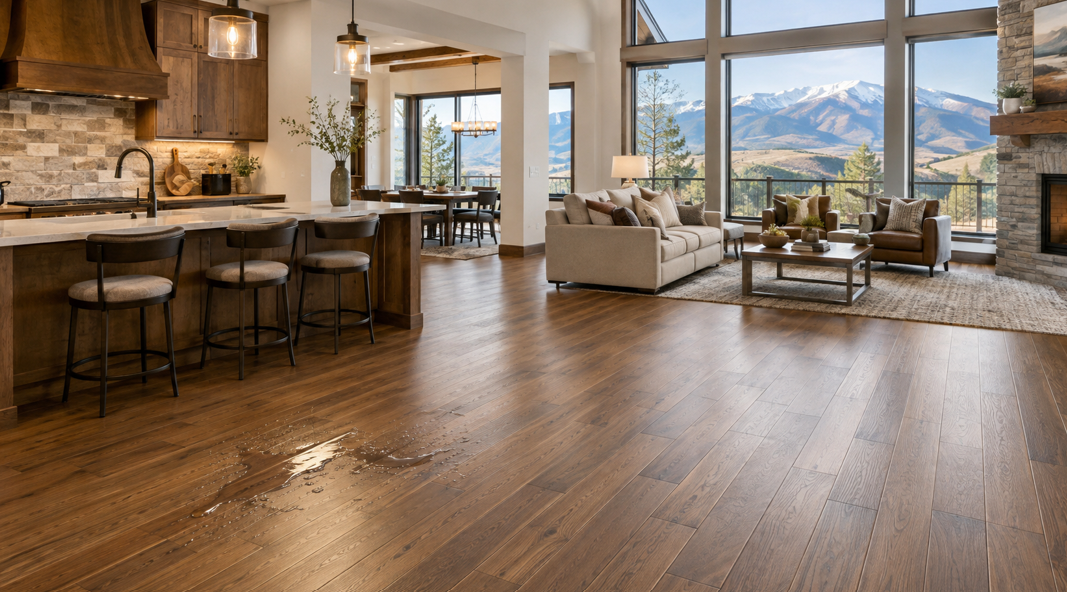
Hardwood brings warmth, character, and lasting style to a home, but many homeowners hesitate when water enters the conversation. Kitchens get spills. Dogs race inside with wet paws. Snow gets tracked through entryways. Washing machines leak. Life happens.
That is where waterproof hardwood has become an interesting option for homeowners who love the appearance of real wood but want more protection against everyday moisture.
For homes in Colorado Springs, that extra protection can be particularly appealing. Our dry climate, snowy winters, seasonal temperature changes, and active indoor-outdoor lifestyles create a unique set of flooring considerations. The right floor needs to look beautiful while fitting the way the household actually lives.
At Carpet World of Colorado Springs, homeowners can compare flooring options with a knowledgeable, non-commission sales team focused on finding the right product for each space. Waterproof hardwood can be a great fit for certain households, but the term itself deserves a closer look before you make a decision.
So, is waterproof hardwood worth the investment? For many Colorado Springs homeowners, the answer can be yes. The real question is whether its construction, moisture protection, appearance, maintenance needs, and price line up with your priorities.
What Does “Waterproof Hardwood” Actually Mean?
The name sounds simple, but waterproof hardwood is not one single type of flooring. Different manufacturers use different constructions and technologies to improve how wood-based floors respond to moisture.
Understanding what is underneath the beautiful wood surface is an important part of comparing products.
It Is Usually an Engineered Product
Traditional solid hardwood is made from a single piece of wood. Because real wood naturally responds to changes in moisture, solid planks can expand or contract as conditions change.
Many products marketed as waterproof hardwood use an engineered construction instead.
Engineered flooring typically combines a real hardwood surface with layers or a specialized core underneath. Depending on the product, those layers can provide greater dimensional stability and additional protection from everyday moisture.
Some newer waterproof hardwood products combine a genuine wood surface with highly moisture-resistant cores. This allows homeowners to get the natural variation and texture of real wood with performance characteristics that would be difficult to achieve with conventional solid hardwood.
Waterproof and Water-Resistant Are Not Always the Same
This distinction matters.
One manufacturer may describe a product as waterproof, while another may offer a water-resistant hardwood with protection for a specified amount of time. The warranty may cover surface spills but not flooding, plumbing failures, moisture entering from below, or water that remains beyond a certain period.
Instead of relying on the word “waterproof” alone, look at the individual product specifications.
Questions worth asking include:
What part of the plank is protected from moisture?
Is there a time limit for standing-water protection?
Does the warranty cover kitchens or bathrooms?
Is below-grade installation approved?
What happens if water reaches the seams?
Are there specific cleaning requirements?
What moisture-related situations are excluded from the warranty?
A beautiful product can still be a poor fit if its protection does not match the room where you want to install it.
The Real-Wood Surface Still Matters
One major attraction of waterproof hardwood is authenticity. Rather than simply reproducing a wood pattern, many products feature a genuine hardwood surface.
That gives each plank natural grain, color variation, knots, mineral streaks, and texture. Homeowners who value the character of real wood may find this particularly appealing compared with flooring that uses a printed wood visual.
Waterproof technology adds practical protection, but the real reason many homeowners consider these floors is simple: they still want their home to feel like it has hardwood.
Why Waterproof Hardwood Makes Sense in Colorado Springs
Colorado Springs is known for its relatively dry environment, yet moisture still plays a major role inside local homes.
Snow, sudden weather changes, household spills, pets, plumbing, and everyday cleaning can all introduce water to a floor. At the same time, seasonal changes in indoor conditions can affect natural wood products.
Waterproof hardwood attempts to balance those realities.
Snow and Wet Boots Are Part of Colorado Living
Winter moisture often enters the home through the front door rather than the roof.
Snow collects on boots, coats, backpacks, pet paws, and outdoor gear. Once everyone comes inside, that snow begins melting.
Entryways and adjoining living spaces can quickly end up with small puddles and wet footprints. Traditional hardwood owners often become very attentive about wiping those areas immediately.
A waterproof or enhanced moisture-resistant hardwood can provide extra confidence in spaces that experience occasional wet-foot traffic.
That does not mean standing water can simply be ignored. Prompt cleanup remains a good flooring habit regardless of the product. The advantage is having another layer of protection when you do not catch every drop immediately.
Dry Conditions Create Their Own Considerations
People often think only excessive moisture affects hardwood. Very dry indoor conditions can matter too.
Wood naturally responds to its environment. Depending on the product, large changes in indoor humidity can contribute to expansion or contraction.
Engineered constructions generally offer greater dimensional stability than conventional solid hardwood, which can make them attractive in climates where indoor conditions vary during the year.
Even with engineered or waterproof products, following the manufacturer's recommended indoor environmental conditions helps protect the flooring and warranty.
Colorado Homes Tend to Blend Indoor and Outdoor Living
Colorado Springs homeowners have easy access to hiking, skiing, parks, trails, gardens, and year-round outdoor activities. That lifestyle often translates into more dirt, snow, water, and pet traffic entering the house.
Families in areas such as Black Forest, Monument, Fountain, and surrounding communities may also have larger yards, active pets, or entrances that receive substantial outdoor traffic.
For these households, flooring needs to do more than photograph well. It needs to work with real daily routines.
Waterproof hardwood can offer an appealing middle ground between natural wood character and enhanced everyday performance.
Where Does Waterproof Hardwood Work Best?
The value of waterproof hardwood depends heavily on where you plan to put it.
A flooring choice that makes sense for an open kitchen and living area may not be the right solution for every bathroom, basement, or utility space.
Kitchens
Kitchens are one of the strongest reasons homeowners consider waterproof hardwood.
Water bowls spill. Dishwashers drip. Ice cubes melt. Sinks splash. Cooking itself creates plenty of opportunities for liquid to reach the floor.
Traditional hardwood can work beautifully in kitchens when properly selected and maintained, but homeowners who want additional moisture protection may prefer an engineered waterproof option.
It also allows hardwood visuals to continue from a living room or dining room into the kitchen, creating a more unified appearance throughout an open floor plan.
Entryways and Mudrooms
Colorado entryways deal with snow, mud, grit, and wet shoes throughout winter and spring.
Waterproof hardwood can make sense when homeowners want the warmth of wood in these transitional spaces without feeling overly cautious every time the weather changes.
Good entry mats and regular cleaning still matter because grit can scratch many flooring finishes, waterproof or not.
Living Rooms and Open Floor Plans
Water may not be the main concern in a living room, but waterproof hardwood can still provide value.
Modern homes often connect kitchens, dining spaces, hallways, and living areas without clear flooring boundaries. Using one compatible material throughout can make rooms feel larger and more cohesive.
For homeowners who want that uninterrupted hardwood appearance, enhanced moisture protection can make extending wood into adjoining areas feel more practical.
If you are comparing species, colors, plank widths, finishes, and engineered constructions, exploring available Hardwood flooring can help you see how different options may fit your home and lifestyle.
Basements
This area requires more careful product selection.
Some engineered hardwood products are approved for below-grade installations, while others are not. Basements can also have moisture conditions that differ considerably from upper levels.
Before choosing hardwood for a basement, check the specific product requirements, subfloor conditions, installation method, and moisture-management recommendations.
A product marketed as waterproof is not automatically appropriate for every basement.
Bathrooms and Laundry Areas
These spaces deserve the same product-specific approach.
Some waterproof hardwood collections may be approved for certain bathrooms or laundry rooms. Other warranties may restrict these installations.
If frequent standing water, floor drains, shower overflow, or plumbing leaks are realistic concerns, comparing hardwood with waterproof vinyl or tile can provide a clearer picture of which material fits the room best.
Waterproof Hardwood vs. Traditional Hardwood
If you already know you want genuine wood, the biggest decision may be whether the added moisture protection is worth paying for.
Both traditional and waterproof hardwood have compelling strengths.
Traditional Hardwood Offers Timeless Appeal
Conventional hardwood has been valued for generations because of its natural beauty and ability to develop character over time.
Solid hardwood can also offer refinishing potential depending on the species, thickness, wear, and installation. For homeowners focused on long-term restoration possibilities, that can be a significant benefit.
In rooms where moisture exposure is minimal, traditional hardwood may provide everything the homeowner needs without requiring specialized waterproof construction.
Waterproof Hardwood Adds Practical Protection
Waterproof hardwood is attractive to households that want real wood without feeling quite as vulnerable to ordinary spills.
That can be valuable for:
Families with young children
Homes with dogs or cats
Open kitchen and living areas
Snowy entryways
Busy households
Homeowners who entertain frequently
Rooms where occasional spills are expected
The benefit is less about turning hardwood into an indestructible surface and more about improving its compatibility with everyday life.
Refinishing Potential Can Differ
This is one area where careful comparison matters.
Because waterproof hardwood products can use different cores and wood-surface thicknesses, refinishing options vary. Some may allow limited refinishing or surface renewal, while others are designed primarily around their factory finish.
If refinishing your floor decades from now is important to you, ask about the wear layer and manufacturer recommendations before selecting a product.
The Best Choice Depends on Your Priorities
Traditional hardwood may appeal more to someone focused on classic construction and future refinishing.
Waterproof hardwood may appeal more to someone who values authentic wood appearance but wants additional protection in an active household.
Neither is automatically better. The stronger choice is the one that fits your room, budget, maintenance preferences, and expectations.
Waterproof Hardwood vs. Luxury Vinyl and Other Waterproof Floors
Waterproof hardwood is not the only option for homeowners concerned about moisture.
Luxury vinyl, waterproof flooring, porcelain tile, and other materials can all work well in moisture-prone spaces. The deciding factor often comes down to what you value most.
Choose Waterproof Hardwood for Real-Wood Character
Even excellent wood-look products are designed to reproduce the appearance of wood. Waterproof hardwood can offer an actual hardwood surface.
That means natural differences from plank to plank rather than repeated printed patterns.
If authentic grain, texture, warmth, and natural variation are high priorities, waterproof hardwood has a clear appeal.
Choose Luxury Vinyl for Maximum Practicality
Luxury vinyl is popular because it combines strong moisture performance with relatively straightforward care.
It can be especially appealing in basements, laundry areas, active households, and other spaces where water exposure is a major concern.
High-quality luxury vinyl also comes in convincing wood visuals, making it an alternative worth comparing when practical performance carries more weight than having a genuine wood surface.
Choose Tile for High-Moisture Spaces
Porcelain and ceramic tile remain strong choices for bathrooms, laundry rooms, entry areas, and other spaces where water may be frequent.
Tile also provides enormous design flexibility, from natural stone looks to wood-inspired planks.
The tradeoff is that tile creates a different feel underfoot and visually than genuine hardwood.
Think About the Whole Home
Flooring decisions become easier when you stop evaluating one room at a time.
Consider how one space flows into the next. A waterproof hardwood may allow you to carry a consistent real-wood appearance through a kitchen, dining room, hallway, and living space.
In another home, combining hardwood in living areas with tile or luxury vinyl in moisture-heavy rooms may make more sense.
The right answer is the one that creates a beautiful, practical transition throughout your specific home.
Questions to Ask Before Buying Waterproof Hardwood
“Is it waterproof?” is only the first question.
A little extra research before purchasing can prevent surprises later.
What Is the Flooring Made From?
Ask how the plank is constructed.
Find out whether it has a genuine hardwood veneer, what type of core it uses, and how that construction improves moisture performance.
Two floors both labeled waterproof hardwood can have very different designs.
What Exactly Does the Warranty Cover?
Read beyond the headline.
Look for details about:
Standing-water protection
Time limits
Surface spills
Pet accidents
Plumbing leaks
Bathrooms
Kitchens
Basements
Moisture from the subfloor
Installation requirements
A strong warranty can add confidence, but only when the installation and use fall within its terms.
Can It Go in the Room You Are Remodeling?
Never assume that a waterproof label means unrestricted installation.
Check whether the specific collection is approved for the room, floor level, subfloor, and installation method involved in your project.
How Will It Handle Your Household?
Think about daily life rather than an ideal version of your home.
Do you have a large dog? Young children? A busy kitchen? Snow-covered boots? Frequent visitors? An open floor plan?
The best flooring fits those habits rather than requiring the household to change around it.
What Does It Look Like in Person?
Flooring can look dramatically different in a showroom sample than it does across an entire room.
Look at grain variation, plank width, texture, sheen, knots, color changes, and how multiple samples work together.
Natural hardwood variation is part of its appeal, so seeing the material firsthand can help set realistic expectations.
Who Will Install It?
The performance of premium flooring also depends on installation.
Subfloor preparation, moisture testing, expansion requirements, transitions, installation method, and manufacturer specifications all contribute to the final result.
Professional installation can help ensure the product performs as intended and maintains a clean, finished appearance.
Is Waterproof Hardwood Worth the Extra Investment?
For many homeowners, yes. But it earns its value in specific ways.
Waterproof hardwood can be particularly worthwhile when you want authentic wood and know that everyday moisture will be part of the room.
It May Be Worth It If You:
Want real hardwood rather than a printed wood look
Have children or pets
Prefer hardwood in the kitchen
Want continuous flooring across an open floor plan
Regularly deal with snowy or wet footwear
Want more moisture protection than traditional wood provides
Plan to stay in the home long enough to value a premium flooring upgrade
Care about both natural character and everyday convenience
In these situations, the added performance can make the floor easier to live with.
It May Not Be Necessary If You:
Are installing wood in a low-risk bedroom or formal room
Rarely deal with spills or moisture
Prefer traditional solid hardwood construction
Place a high priority on future refinishing
Have a tighter project budget
Need flooring for a space where another waterproof material is better suited
Spending more for a feature you do not need rarely adds meaningful value.
Look Beyond the Initial Price
Flooring value is not only about price per square foot.
Consider installation, expected longevity, maintenance, lifestyle fit, appearance, warranty coverage, and how much you enjoy the floor every day.
A higher-quality floor that suits the household can offer better long-term satisfaction than selecting a lower-priced product and discovering that it does not work well for the space.
Get the Best Performance From Waterproof Hardwood
Even waterproof flooring benefits from good care.
The goal is not to treat the floor as fragile. A few sensible habits simply help keep the real wood surface looking its best.
Clean Spills Promptly
Waterproof protection gives you added confidence, but there is little benefit in leaving liquid on any finished floor.
Wiping spills when you notice them helps prevent residue, staining, and slippery areas.
Control Grit at Exterior Doors
Colorado soil, sand, and winter debris can be abrasive.
Use entry mats and remove loose grit with a soft broom or hard-floor vacuum before it gets tracked through the house.
Use Approved Cleaning Products
Follow the flooring manufacturer's care recommendations. Products designed for the specific finish are less likely to leave residue or affect the appearance of the wood.
Avoid flooding the floor during cleaning.
Protect the Surface From Scratches
Furniture pads, regular sweeping, trimmed pet nails, and thoughtful furniture movement can help maintain the finish.
Waterproof does not mean scratch-proof, so surface care remains important.
Pay Attention to Indoor Conditions
Real wood continues to respond to its surrounding environment even when modern construction improves stability.
Keeping indoor conditions within the manufacturer's recommended range helps the floor perform consistently and protects warranty coverage.
Find the Right Hardwood for Your Colorado Springs Home
Waterproof hardwood can be worth it when you want the genuine beauty of wood with more confidence around everyday moisture.
For Colorado Springs households dealing with snowy boots, active pets, kitchen spills, changing seasons, and busy family routines, that combination can be particularly appealing. The key is choosing the right product rather than assuming every floor carrying a waterproof label performs the same way.
Look carefully at construction, room approvals, warranty details, installation requirements, maintenance, appearance, and long-term priorities. Then compare those benefits with traditional hardwood, luxury vinyl, tile, and other options that could work in the same space.
Carpet World of Colorado Springs offers a personalized showroom experience backed by decades of combined flooring and design expertise. Their non-commission approach gives homeowners room to compare materials based on what actually fits their home rather than being pushed toward a particular product.
Thinking about waterproof hardwood for your next flooring project? Get in touch to discuss your rooms, lifestyle, design preferences, and flooring options with the Carpet World of Colorado Springs team.


