

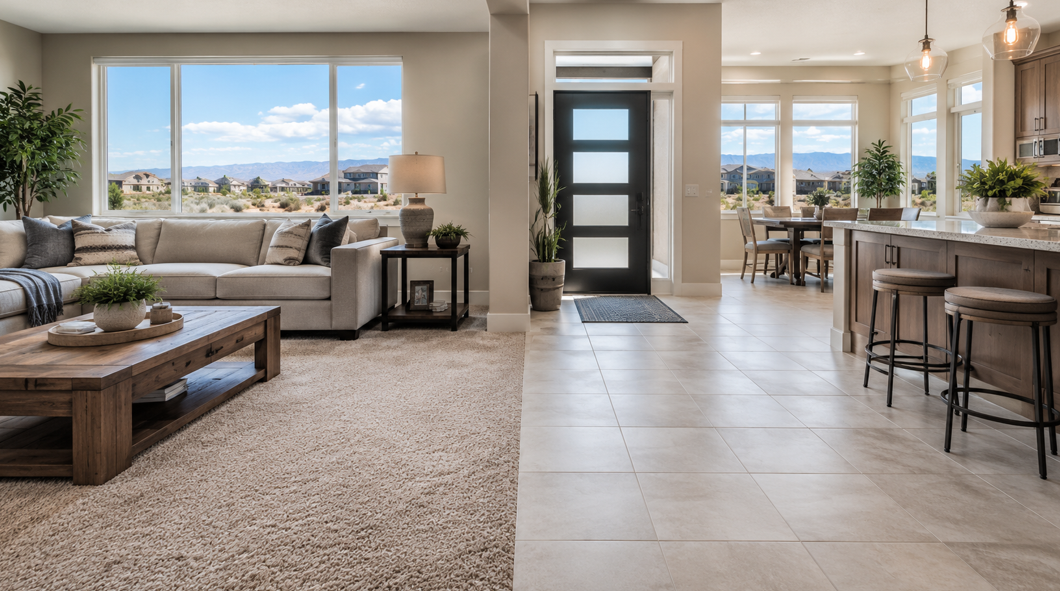
Choosing between carpet and tile can shape how a room feels, performs, and fits into everyday life. In Fountain homes, both flooring types can be excellent choices, but they solve different problems.
Carpet brings softness, warmth, quieter rooms, and a comfortable surface underfoot. Tile offers durability, moisture resistance, easy cleaning, and a more structured look that works especially well in kitchens, bathrooms, entryways, and other hard-working spaces.
So which one is better?
The answer depends on where the flooring is going, how your household uses the room, how much maintenance you’re comfortable with, and the style you want to create.
At Carpet World of Colorado Springs, homeowners can compare flooring options with help from a knowledgeable, non-commission sales team focused on finding the right product for each home rather than pushing a particular material. With more than 40 years of combined flooring and design experience, the family-owned team helps customers make practical choices based on comfort, durability, appearance, and long-term value.
If you’re deciding between carpet and tile for a Fountain home, this guide breaks down how each performs across the areas that matter most.
Carpet vs. Tile at a Glance
Carpet and tile create very different experiences in a room.
Carpet is a soft floor covering made from fibres attached to a backing system. It comes in a wide range of colours, textures, pile heights, patterns, and performance levels.
Tile is a hard-surface flooring material commonly made from ceramic or porcelain, although natural stone is another option. It can imitate materials such as wood, marble, concrete, and limestone while offering the durability associated with a hard floor.
In simple terms:
Carpet may be a strong choice if you value:
Softness underfoot
A warmer feel
Quieter rooms
Comfortable bedrooms and living spaces
A broad selection of textures and colours
A softer surface for households that spend a lot of time on the floor
Tile may be a strong choice if you value:
Moisture resistance
Easy removal of surface dirt
Durability in high-traffic areas
A structured, polished appearance
Stone, concrete, or ceramic design styles
Flooring for kitchens, bathrooms, and entry areas
Neither material is automatically better throughout an entire home.
In many cases, the smartest approach is to use each where its strengths make the most sense.
Comfort and Warmth
For many homeowners, comfort is one of the clearest differences between carpet and tile.
Carpet Feels Softer Underfoot
Carpet provides cushioning that hard flooring cannot replicate.
That softness can make a noticeable difference in:
Bedrooms
Family rooms
Playrooms
Upstairs spaces
Home offices
Reading areas
In a room where people walk barefoot, sit on the floor, or relax for long periods, carpet can create a more comfortable atmosphere.
Padding beneath the carpet also contributes to the overall feel. Different pad types can change how firm, cushioned, or supportive the finished floor feels.
Tile Feels Firmer and Cooler
Tile creates a hard, solid surface.
Some homeowners appreciate that clean, substantial feel, especially in kitchens, bathrooms, and open living areas. Others may find it less comfortable in rooms where they want softness.
During colder months, tile can also feel cool underfoot.
That does not make it unsuitable for Colorado homes, but it can influence where homeowners prefer to install it. Area rugs can add softness in selected areas, while some projects may consider compatible radiant heating systems beneath tile where appropriate.
Which Is Better for Comfort?
For pure softness, carpet usually has the advantage.
For homeowners who prefer a firm surface with a clean, structured appearance, tile may be the better fit.
The room’s purpose matters more than one universal rule.
Durability and Everyday Wear
Fountain households can place very different demands on flooring.
A quiet guest bedroom may see limited use, while an entryway connected to a driveway can handle shoes, grit, snow, and repeated foot traffic.
Carpet Durability Depends on the Product
Not all carpet performs the same way.
Factors such as fibre type, construction, density, twist, pile style, backing, and padding can influence how a carpet handles daily use.
High-traffic areas may benefit from products designed for stronger wear performance, while a bedroom may prioritise softness and appearance.
Households with pets, children, or frequent visitors may also want to compare stain resistance, texture retention, and cleaning requirements.
Tile Performs Well in Busy Areas
Tile is often selected for spaces that experience frequent traffic because the surface is firm and durable.
Porcelain in particular is commonly used in:
Entryways
Kitchens
Bathrooms
Mudrooms
Hallways
Finished basements
The product still needs to be appropriate for the application. Floor-rated tile, wall tile, polished tile, and textured tile can have very different characteristics.
Which Is Better for Durability?
Tile often has an advantage in areas exposed to frequent traffic, dirt, or moisture.
Carpet can still perform very well when the right product is matched to the room and maintained appropriately.
Cleaning and Maintenance
Maintenance is another important factor when comparing carpet and tile.
Neither option is maintenance-free, but the type of care each requires is different.
Carpet Needs Routine Vacuuming
Carpet fibres can trap dust, hair, crumbs, pet fur, and other particles.
Routine vacuuming helps keep the surface looking fresh and prevents debris from settling deeper into the pile.
Depending on the household and carpet type, periodic professional cleaning may also help maintain appearance and performance.
Spills benefit from prompt attention, particularly when the substance has strong colour or oil content.
Tile Is Easy to Wipe and Sweep
Tile offers a hard surface that makes loose debris easy to see and remove.
Routine care may include:
Sweeping
Vacuuming with a hard-floor setting
Damp cleaning with an appropriate product
Cleaning grout as needed
Tile itself can be straightforward to maintain, although grout lines deserve attention.
Larger tiles may reduce the number of grout joints across the floor, while smaller tile formats create more.
Grout Makes a Difference
The grout colour, type, location, and maintenance routine can affect how a tiled floor looks over time.
Light grout may show some types of dirt more readily, while darker or mid-tone grout may create a different maintenance experience.
Selecting grout should be part of the flooring decision rather than an afterthought.
Which Is Easier to Maintain?
Tile often has an advantage when quick surface cleaning is the main priority.
Carpet may require more regular attention to fibres, spills, and embedded debris, but many households prefer the comfort enough to consider that maintenance worthwhile.
Moisture and Spill Resistance
This is one of the biggest practical differences between carpet and tile.
Tile Works Well in Moisture-Prone Spaces
Appropriate tile can be an excellent choice for areas where water or spills are expected.
Common examples include:
Bathrooms
Kitchens
Laundry rooms
Entry areas
Mudrooms
Porcelain and ceramic products differ in their properties, so homeowners still benefit from selecting tile that is rated for the intended application.
Installation details also matter. Grout, underlayment, waterproofing systems in wet areas, and proper installation all contribute to the finished project.
Carpet Is Better Suited to Drier Spaces
Carpet is commonly used in rooms where moisture is limited.
Bedrooms, living rooms, offices, and family rooms are typical examples.
A spill on carpet does not automatically mean damage, especially when it is cleaned promptly and the carpet has suitable stain-resistant features. Still, carpet is generally less practical for spaces where water is a normal part of daily use.
Which Is Better Around Water?
Tile clearly has the advantage in rooms where moisture exposure is expected.
Carpet is better reserved for areas where comfort and warmth matter more than water resistance.
Sound and Noise Control
Flooring affects how sound behaves inside a home.
Carpet Helps Soften Noise
Carpet and padding absorb sound.
That can reduce:
Footstep noise
Echo
Furniture movement
Activity from children
General room noise
This can be especially helpful in bedrooms, upstairs rooms, hallways, home offices, and family spaces.
In open homes with hard walls, high ceilings, and large windows, adding carpet in selected areas can also soften the acoustic character of the space.
Tile Reflects More Sound
Tile is a hard surface, so it tends to reflect sound rather than absorb it.
In a kitchen or bathroom, this may not be an issue.
In a large open living space with several hard materials, however, homeowners may notice more echo.
Area rugs, upholstered furniture, curtains, and other soft materials can help balance the acoustics.
Which Is Better for Quiet Rooms?
Carpet usually performs better when noise control is a priority.
Tile can work perfectly well in social and functional spaces where sound absorption is less important.
Style and Design Flexibility
Both carpet and tile offer a wide range of design possibilities, but they create different visual effects.
Carpet Adds Texture and Softness
Carpet can make a room feel warmer and more relaxed.
Options range from subtle neutrals to stronger colours, patterns, and textured surfaces.
Popular looks may include:
Soft beige
Warm grey
Taupe
Textured neutrals
Patterned carpet
Low-profile contemporary styles
Plush bedroom carpet
Carpet is particularly useful when a room needs visual softness to balance harder materials such as stone countertops, painted cabinetry, or large windows.
Homeowners can explore carpet flooring options to compare colours, textures, constructions, and performance features suited to different spaces and lifestyles.
Tile Can Recreate Many Materials
Tile offers enormous design range.
Homeowners can choose looks inspired by:
Marble
Travertine
Slate
Concrete
Limestone
Wood
Handmade ceramic
Geometric patterns
The same material category can create very different moods.
A large neutral porcelain tile may feel calm and modern, while a patterned ceramic floor can become a strong design feature.
Tile Size Changes the Look
Large-format tile can create fewer grout lines and a more continuous appearance.
Smaller tiles can introduce pattern, texture, and detail.
Mosaics are often used in showers, niches, backsplashes, or decorative areas where smaller pieces suit the layout.
Which Offers Better Style?
Neither wins outright.
Carpet is strong when softness, texture, and comfort define the design.
Tile is strong when homeowners want a structured surface, visual pattern, natural-material look, or architectural feel.
Carpet vs. Tile for Bedrooms
Bedrooms are one of the most common places where carpet has an advantage.
Why Carpet Works Well in Bedrooms
Carpet creates a soft surface when getting out of bed and can make the room feel warmer during colder mornings.
It also helps absorb sound, which can contribute to a quieter atmosphere.
For primary bedrooms, children’s rooms, and guest rooms, those comfort benefits can be especially appealing.
When Tile Can Work in Bedrooms
Tile may suit bedrooms when the broader home design uses the same hard surface continuously.
For example, a homeowner may prefer a consistent tile floor through an open-plan home or want a particular stone-inspired design.
Area rugs can bring softness around the bed.
Best Choice for Bedrooms
If comfort, warmth, and quiet are the priorities, carpet is often the stronger option.
Tile works better for homeowners who prioritise visual continuity, hard-surface maintenance, or a particular design style.
Carpet vs. Tile for Living Rooms
Living rooms sit somewhere in the middle because both options can work well.
Carpet Creates a Relaxed Atmosphere
Carpet can make a living room feel inviting, especially when the space is used for movie nights, family time, children’s play, or casual entertaining.
It also helps soften sound from televisions, conversation, and foot traffic.
Tile Creates a Clean, Open Look
Tile can suit living rooms where the design leans contemporary, Southwestern, transitional, or stone-inspired.
Large-format tile can create strong visual flow in open-plan spaces connected to the kitchen or dining area.
What Matters Most?
Think about how the household actually uses the room.
If people regularly sit or play on the floor, carpet may provide more comfort.
If the space connects directly to exterior doors or busy hard-surface areas, tile may feel more practical.
Carpet vs. Tile for Kitchens
Tile is usually the more practical option in a kitchen.
Why Tile Makes Sense
Kitchens involve:
Food spills
Water
Cooking residue
Frequent cleaning
Heavy foot traffic
A suitable tile surface can handle those conditions while creating a polished appearance.
It also works with many cabinet and countertop styles.
Why Carpet Is Less Common
Carpet’s absorbent surface makes it less suited to regular food and liquid spills.
Even with modern stain-resistant products, most homeowners prefer hard flooring in kitchens.
Best Choice for Kitchens
Tile generally has the advantage.
The main decision then becomes which tile size, finish, colour, and layout best suit the room.
Carpet vs. Tile for Bathrooms
Bathrooms are another area where tile usually makes more sense.
Tile Handles Wet-Area Design
Appropriate tile can be used on bathroom floors and, depending on the product and installation system, shower walls or other wet-area surfaces.
It also gives homeowners many design options, from spa-inspired stone looks to decorative ceramic styles.
Carpet and Bathrooms
Carpet is rarely the preferred choice for rooms where splashes and moisture are part of normal use.
The comfort benefit usually does not outweigh the practical demands of the space.
Best Choice for Bathrooms
Tile is generally the stronger choice, provided the selected product and installation are appropriate for the application.
Carpet vs. Tile for Entryways
Fountain winters can bring snow, grit, and moisture into the home.
That makes the entryway an important flooring decision.
Tile Handles Tracked-In Debris Well
Tile creates a hard surface that can be swept and cleaned when shoes bring in dirt or snow.
A suitable entry mat can help capture debris before it travels farther into the home.
Carpet Requires More Attention Near Exterior Doors
Carpet can feel welcoming, but a heavily used exterior entrance may expose it to moisture and grit more frequently.
Some homes solve this by using tile at the main entry and transitioning to carpet in the adjoining living room or hallway.
Best Choice for Entryways
Tile often has the advantage in busy entrances.
A coordinated carpet beyond the entry can then create a softer feel in the rest of the home.
Carpet vs. Tile for Families with Children
Families with children may appreciate different qualities from each floor.
Carpet Provides a Softer Play Surface
For young children who spend time sitting, crawling, reading, or playing on the floor, carpet provides cushioning.
It can also soften the sound of active play.
Tile Makes Messes Easy to See
Tile may be preferable in areas where spills, snacks, crafts, or muddy shoes are common.
A hard surface makes loose debris and many everyday messes easier to remove.
A Mixed Approach Often Works Best
Many family homes benefit from using tile in the kitchen and entry areas while keeping carpet in bedrooms, playrooms, and family spaces.
That approach uses each material where its strengths are most useful.
Carpet vs. Tile for Pet Owners
Pets influence flooring decisions in several ways.
Carpet Can Feel Comfortable for Pets
Carpet offers traction and cushioning, which some pets may find more comfortable than a hard surface.
Pet-focused carpet products may also offer features intended to help with stain resistance and everyday household use.
Regular vacuuming remains important for removing fur and tracked-in debris.
Tile Can Be Easy to Clean
Tile is useful when pets bring in mud, water, or outdoor debris.
It can also make fur easier to see and remove.
The surface may feel cooler and firmer, though, so pet beds or rugs can create softer resting areas.
Which Is Better for Pets?
It depends on the household.
Owners focused on easy surface cleaning may prefer tile.
Those who value softness, traction, and warmth may prefer carpet in selected rooms.
Cost and Long-Term Value
Price is rarely as simple as comparing the cost of one flooring material with another.
The full project can include:
Product
Floor preparation
Padding
Underlayment
Grout
Installation
Transitions
Removal of existing flooring
Room-specific requirements
Carpet Projects
Carpet installations generally involve the carpet itself, suitable padding, preparation where required, transitions, and professional installation.
Different fibres, constructions, and performance levels can affect the overall investment.
Tile Projects
Tile installation may involve additional preparation depending on the existing surface.
Tile dimensions, pattern, substrate condition, grout selection, and installation details can all influence the project scope.
Large or complex tile layouts may also require additional planning.
Compare Value, Not Only Starting Price
The best value comes from flooring that fits the room and household.
A material that performs well, feels right, and matches your maintenance expectations may provide more lasting satisfaction than simply choosing based on the lowest initial figure.
Why Professional Installation Matters for Both
A beautiful flooring sample only reaches its potential when the installation supports it.
Carpet Installation Affects the Finished Look
Professional carpet installation helps create smooth transitions, consistent positioning, appropriate stretching, clean edges, and a polished overall appearance.
Padding and preparation also influence how the finished carpet feels.
Tile Installation Starts with Preparation
Tile benefits from a suitable, properly prepared installation surface.
Layout matters too.
Doorways, cabinets, walls, room dimensions, transitions, and tile pattern can all influence where cuts and grout joints appear.
Professional planning helps the finished surface look intentional rather than pieced together.
Communication Matters Throughout the Project
Homeowners also benefit from knowing what to expect during ordering, delivery, preparation, and installation.
Carpet World of Colorado Springs places clear communication at the centre of the customer experience and works with licensed, experienced installers.
Its “No Surprise” approach focuses on straightforward expectations and honest service throughout the flooring process.
So, Which Is Best for a Fountain Home?
There isn’t one winner for every room.
Carpet may be the better choice when you want:
Softness underfoot
A warmer bedroom or living room
Better sound absorption
A comfortable play surface
Texture and visual warmth
Tile may be the better choice when you want:
Moisture resistance
Straightforward surface cleaning
Durability in busy areas
A stone, concrete, or ceramic look
Flooring for kitchens, bathrooms, or entrances
And sometimes the best answer is both.
A Fountain home might use tile in the entryway, kitchen, laundry room, and bathrooms while using carpet in bedrooms, upstairs spaces, and the family room.
That allows each material to do what it does best.
Before deciding, consider your household routines, pets, children, traffic patterns, cleaning preferences, design goals, and the specific requirements of each room.
Carpet World of Colorado Springs combines more than 40 years of flooring and design experience with a boutique showroom, personalized service, a non-commission sales team, and professional installation support. Homeowners can compare materials side by side and get guidance based on the way their home actually functions.
If you’re deciding between carpet and tile for your Fountain home, get in touch with Carpet World of Colorado Springs for personalized flooring guidance and help choosing the right material for each room.


